
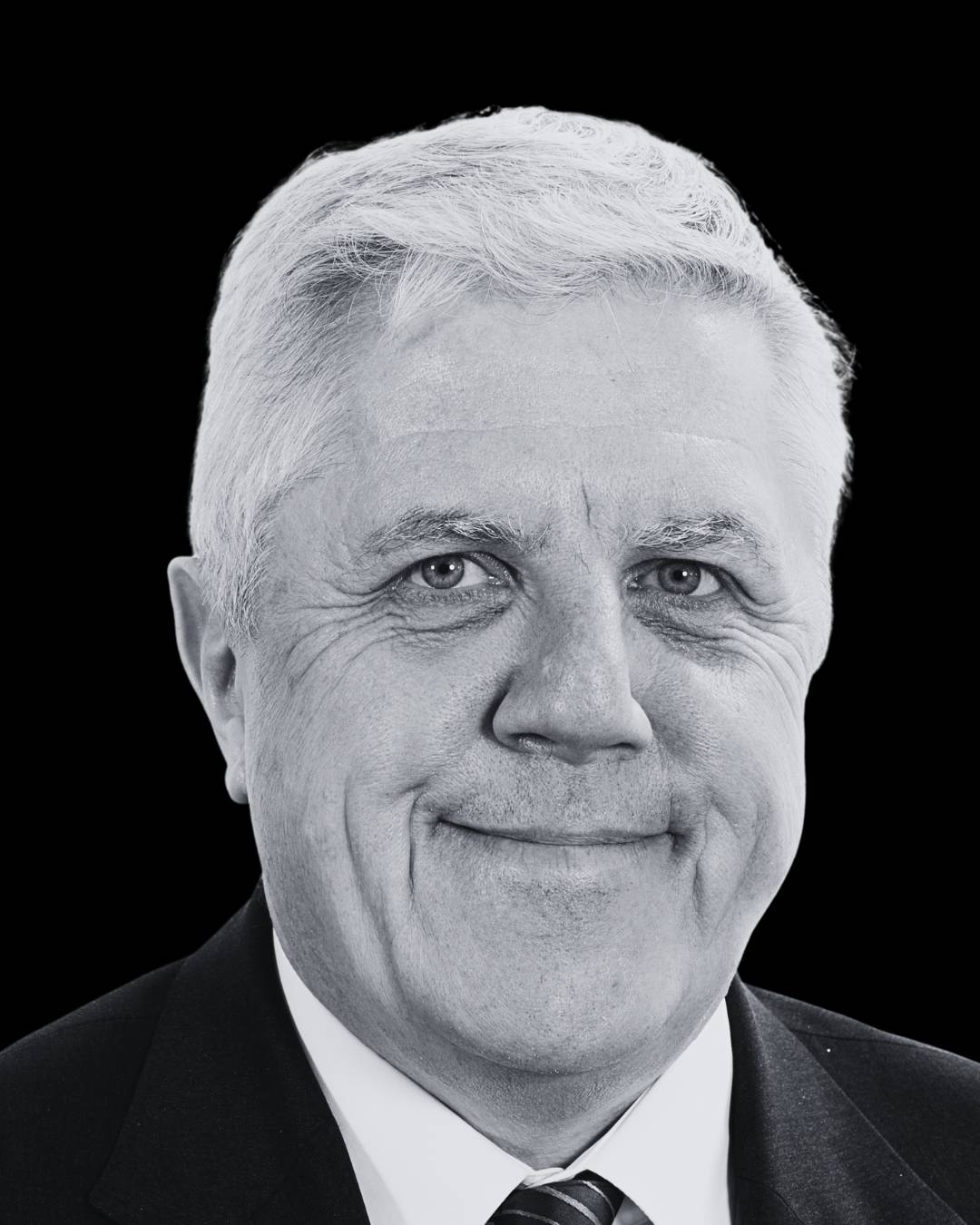
The conversation as it happened, lightly edited for reading. Christian asks, the guest answers.
Christian: Hello, Edwin. Looking back to a younger version of you, before all the titles and all the exits and the fame, who were you as a person back then?
Edwin: Way back, it's a big question. I was a very unconfident child. And to give you a little bit more background on that, I was born with a bit of a facial deformity. I had an extended chin, a large chin. And it meant that every time I walked into a room, people would look at me and point and laugh. So it wasn't severe enough to be disabled or anything like that at all. But it made you stand out in a bad way in the crowd.
So it made me quite introverted. I didn't like to go into big rooms. I didn't like to go into places where people knew me. So that was something that was built in for me. I was also lucky enough to have parents who were very hardworking. They're both intelligent. My dad had got caught up in the war, and so he'd lost his education. So they both had to work as laborers their entire life. And I got to see what it was like just working with your hands, getting very poorly paid.
We didn't have a car. We didn't have a telephone. We didn't feel poor, you know, we had food, we had everything, but it was just realizing how hard they had to work to keep me and my sister going. So it was a combination there of me quite introverted, reasonably smart, and feeling this sort of awkward pressure of walking into a room. At the age of 20, I had a major surgery to change that facial position. It was a sort of pioneering surgery in the UK at that time. And I had to keep my mouth closed with iron wires for two weeks. So you dreaded the idea of sneezing. You thought your head was going to blow off.
But that helped me get through this feeling of being odd. But I don't think you ever get rid of that. You've had 20 years of feeling odd when you walk into a room and being a bit introverted. So that was personal. I really was very serious about sport. I got to international level at table tennis. I wasn't gifted. I just worked hard. So I trained seven days a week, two or three hours a day to get to that level. And I think it just taught me, work hard and you kind of change things, even if you're not absolutely born with all the talent that God could send you.
So it's a combination of someone who's done all those things. And the final thing in my formation: my sister got to Oxford University, which is a big thing in the UK, and was one of the first, well, the first one in an extended family to ever get to one of those universities. So my father hoped that I would do as well. She was older than me. I didn't only fail to get into Oxford University, but I failed twice. And so they asked me back, they said, oh, you're an interesting character, but have a year off and try again. And then they said, we're still an interesting character, but you're not intelligent enough, so you'll have to go somewhere else.
All those things stick with you, and not in a bad way, but they help you think about how fortunate you are. And then my career began to develop and I got a bit lucky. So I think I treasure every good piece of fortune I had and every step I've had along the way. And I realized that you don't have to go to Oxford to do okay in life, which is probably a good thing to realize.
It sounds a bit odd, but I didn't realize it at the time, when I did my A levels, and those are the exams in the UK that you take before you go to university. It's interesting, I was sitting with a group of old friends from school about a month ago, six old friends, and my results were the worst of everybody in the room. So I was quite an undeveloped 18 year old. And yet I went on to university, and then I got a degree, completely surprising to me, a first class honors degree, which is the best you can get. And I didn't expect it. I hadn't seen it come. I opened the envelope and I actually nearly fainted, because I hadn't expected anything like it.
But suddenly, and I hadn't realized it, that was a passport to an awful lot of things. You were suddenly taken out of the crowd. You stood out in your CV at that time. Everybody noticed you've got a first class honors degree. Nobody paid attention to my A levels. It got me easily into a PhD course, it got me to go to Germany and win a NATO fellowship to go to Germany. That was a passport that I simply hadn't thought, I didn't think I could achieve it. I'd never even considered that I might get it.
But once I had it, I realized how many doors had opened up, and how many times I went for job interviews and they said, but you've got a first class degree. In today's world it's more commonplace. But in those days it was more of a rarity. And it was just one of these things that you thought, good God, I didn't realize how important that could be.
Christian: Was it the optimism that you're still proud of?
Edwin: I think that helped me change. I thought I was reasonably good, average good. I felt that about a lot of things I did. I'd have a go at things. I wouldn't be the worst, but I was never the best. And it suddenly gave me this feeling, you know what, maybe you can even do things that you didn't think you could do. It did give me that, it gave me a real jolt to sort of say, hey, you could climb that mountain. And it had never struck me before, which sounds very stupid, but it was just how it was.
Christian: So did you know that you were made for something more, that you were made for something bigger?
Edwin: I didn't have a clue. And I think it was, I went through constant mad moments in my career. For example, my first ever job, I was in Germany doing a postdoc and I didn't want to stay in the lab. So I wanted to get into commercial life. I saw an advert by an American company for a salesman in Germany. And I thought, I'd like to try that. It was selling advanced molecular biology products, so it was something very interesting. So I applied for it. They interviewed me. American guys came over and interviewed me.
They called me up after a week or two and they said, well, you were the worst candidate we had of all the candidates, but you're the only PhD who's prepared to do a sales job. All the Germans don't want to be salesmen, because that's too low a level job for them. But you're prepared to do it, and we want a PhD because these are selling technical products. So my first job, I was told I was the worst candidate, but they had to have me as a result.
I then was told that I needed a driving license. I didn't have one. So I immediately took lessons and failed the test twice. And at that time in Germany, you're then put on hold for six months. If I was on hold for six months, I'd have lost the job, because I had to have the driving license. So my professor at the Regensburg University was kind enough to write to the authorities, and they said, we'll give him a third test. And being German, you'll understand this, they decided to make it easier for me by putting two examiners in the car. So it was even more stressful. One in the front, one in the back.
And I was so nervous, driving like this. And at the end of it, they said, you're the worst driver we've come across for some considerable time, but we realize that you need this for your job. So we're going to be pragmatic, but you must promise us you will drive as little as possible for the first six to 12 months, to avoid any accident. Can you imagine that conversation? It's true, word for word true. So I think, no doubt, I was just grateful to get to the next step. I thought I was lucky.
Christian: That's brilliant. That's so silly. That's so brilliant. Okay.
Edwin: And one more. I had just joined that company, and they were a fantastic company, like a young biotech, and they were selling products. And I was sent to the US for three months of training, unbelievable investment in individuals, that I was so lucky to get. Training in science but also in sales techniques and everything else. And towards the end of that time, we were taking tests all the time. And I'm a bit of a quirky character, and I went to the bathroom, where you do a lot of business with Americans, and the American sales manager was in there.
And he stood next to me at the urinal and said, I absolutely hate you. I can't stand you. If I had any possibility of getting rid of you, I would. But unfortunately, your test scores are so good that I can't do it. It's driving me crazy. But don't think that I won't fire you, given half a chance. So that was the pep talk he gave me in the urinal. I hadn't realized I'd done anything wrong, but there we go. So as you get through those sorts of things and you still keep going, you think, hmm.
Christian: This pattern repeats itself and you get lucky again, right? Do you think that you're lucky, or was it hard work or perseverance?
Edwin: Exactly. Why not? I think it's perseverance. It's trying, it's trying anything, going for jobs that you probably shouldn't get but then getting them. Keep trying, and if it doesn't work out... You've got to have luck, there's got to be a bit of luck. If that first sales job, a good German PhD had turned up and said he'd be a salesman and be committed, then I wouldn't have got the job. It was as simple as that. If those two examiners had not been kind to me on that third test, I couldn't have got it. So you need that bit of luck, but you've got to turn up and take a chance.
Christian: Yes, definitely. I totally agree. I did a bit of research and people often would describe you as steady in uncertainty.
Edwin: I think that's a compliment.
Christian: Yes, it is. You're calm in a storm. Where does the steadiness come from?
Edwin: What I try and focus on is what you can keep control of. So in the middle of the storm, you can either wave your hands and scream, or you can actually think, is there a way out of this storm, or a way to protect myself in this storm, or what can I practically do in the next five minutes, one hour, two days, whatever it is, to help myself in that thing? And instead of the screaming and shouting, which is definitely going on in my head, I actually plan. Trying to plan, because that also relaxes me, to think through what am I going to do next as a result of being caught in this storm. So that's really my reassurance to myself. It's my yoga.
Christian: Let's look at your inner conversation. I have inner conversations, I think other people too. Is there a phrase that you tell yourself when things get uncertain?
Edwin: The thing I try and do in those circumstances is keep calm, and knowing that, particularly in leadership positions, it's so important that you set an example, because if you look frightened, nervous, then the people following you are going to feel terrified, because you've got more control than they have. So I think realizing how you present yourself, how you present the issue, is very, very important.
I think it's also very important to keep on asking questions. How have we arrived in the storm? Asking everybody, maybe nobody knows the answer, but if you put some things together, maybe you'll get an answer to something. And I think that's really important. And being prepared to try something new. Sometimes it's just straightforward, but sometimes it's doing something completely different.
One of the very challenging moments for me in my career at Ablynx was, I think about 2013. We were running a phase 2 trial for a rare blood disease, so you don't have to recruit many patients. I think we were aiming to recruit about 150. But we'd set up the protocol not very well, so it meant that we were recruiting extremely slowly. And as a public company, as you surely know, you have to make promises to the investors about when you're going to finish this trial and so forth. And we were way behind time.
It looked like another year or even more before we could finish the study and complete it. We were getting beaten up in the press. We were getting beaten up by the board of directors. Everybody was depressed, and nobody seemed to think there was anything we could do but sit there and wait, essentially. And I kept thinking to myself, surely there must be something we could do. And I talked to the experts and I genuinely didn't get an answer, because they're programmed to say, you've just got to get through to the end of the trial.
And then I sort of thought to myself, look, what if we could stop the trial now? What if we could stop it today and look at the results? And what if the results were great? Then we'd be in a great position. But you know you can't get your team to look at the results, because it's a blinded study where your clinical team mustn't know what the results are or which patients are getting better or which are not.
So I had this idea that what I'd do is find a clinician in the company that didn't work in the clinical team, that was completely isolated from it, but was smart enough, and he would go and look at the data without the clinical team even knowing he was looking at the data. All he had to do was answer one question, which I said to him: can we stop the trial or not? Are the data good enough? And he went away, and about two days later he came back and I said, my question is this, can we stop or not? He said, you can stop today. And that's all he said, and he walked away.
So I told the clinical team to stop today. They didn't know what I knew. I didn't even share that with my C-suite or my board, because I didn't figure it made any sense to tell them that, because it wasn't going to help them.
We did stop the study, analyzed the data. They were fantastic. We went on to develop that drug and it's now on the market as a saleable product. It would have never got to market if I hadn't done it. The company would have never been this successful if we hadn't done that. So I'm not making out that I'm a genius here. That's absolutely not what I'm saying. But sometimes you have to think out of the box and do things that are risky, but it's the only way forward.
And it's no good waiting for everybody to tell you it's a good idea, because if I'd asked the head of clinical, they would have said no. But we did it in an ethical way, drew our own ethical lines. And it was the foundation for the future of the product and the company.
Christian: Crazy. Well, how did you know that this is the right way? You had to test it. It was an assumption, right?
Edwin: I absolutely didn't know. All I knew was we couldn't sit there and do nothing. We were getting killed. So either we had to completely change our story to the market and say, you know what, it's going to take another 14 months, and our share price would have dropped lower, people may have wanted to fire me or fire other people on the board, so it would have been very bad for the company to do that, but that would have been the alternative. But we had to do one thing or the other. We couldn't just drift along and fail to meet our objectives.
Christian: You went from success to success. What drove you as a person? What was your goal? What was your mission?
Edwin: Success is fun. And I should say that I wasn't the founder of Oxford Asymmetry. I was the first CEO, and I'm going to explain why the difference is important. I don't think I've got the skill set to be a founder. I think founders are people who can look at a white sheet of paper and imagine something and say, I've got a brand new idea and I can see how this could be a company. I can't do that. That's not me. Once somebody has sketched out the idea, I can build on that idea very quickly. But that's a piece of my imagination that is weak, the idea of coming up with the concept initially.
So when I went into Oxford Asymmetry, there was a professor from the University of Oxford who already had the idea. He already had three or four of his postdocs in the laboratory beginning to do the work around the idea. And I had to take that idea and then build it. We built it to 250 people and made money and everything like that. And we sold it to Evotec, as you said. You asked why I did it twice. I really enjoyed that building process. I enjoyed building the teams, building the facility, building the capability of the company.
In that case, it was a revenue generating company, so we became profitable. We actually took the company public. So all these were learnings. I'd never run a company before. I was of a scientific background. I'd been working in commercial parts of organizations, so business development and the selling part of technical products. And for me it was the first time of very intense investor interaction, with high net worth individuals at first and then with the public markets. And each one of those processes, writing a prospectus for the first time, I'd never done it, no idea what I was doing. So learning, learning, learning.
So I did that. It was quite a tough decision to sell the company, because when I proposed selling it, the company was doing very well. We were selling more, being more profitable, everybody's happy. But we were only a chemistry company, and I came to the conclusion that you needed biology as well. We didn't have it. Biology companies were worth more than us at that time. And I figured the only way to go forward was to actually combine with a biology company to create something great.
When I told my management colleagues, they were shocked, because they thought, this is a job for life, we're all doing great, why wouldn't we just go forward? And for me, we could have gone forward a few more years, but we would have hit a wall. And so that's when we went looking for Evotec, and brought the biology to our chemistry. And the very nice thing is, back in Oxford where we started, there are still hundreds of people working in that facility that I was involved in 30 years ago.
So then in the interim period after Oxford Asymmetry, about three or four years, I did a lot of non-exec directorships. I wanted to get more experience in being more hands-off and not so directive, and also to work in different companies. So I worked in service companies, drug discovery companies, companies in different countries in Europe, VC-backed companies, private equity-backed companies, public companies. So all that range, I was learning. And one of the companies happened to be Ablynx, and I became chairman of them.
And the five venture capitalists involved, Sofinnova, Gimv here in Belgium, Abingworth in the UK, Gilde in Holland, they all knew me from my past. And they said, you know what, there are five VCs here and we need someone to control us. So they brought me in. Horrendous job, controlling five VCs. After two years, they said to me, you know what, the CEO is good. He was good. He was the one who basically founded the company and did all that hard work, but he's not ambitious enough. You need to get a new CEO. And I said, okay. So I started the process.
I kept bringing candidates and they couldn't agree on one of them. There was always one who didn't like the other one. And then the completely true story: I was on holiday with my new wife at that time, skiing. And you know, the best part of skiing is eating. So we were actually eating lunch on the mountainside and my phone went off, and two of the VCs called me and said, you know, Edwin, we're absolutely sick of not having a CEO in this company, because we think it's got such potential. And I said, I'm working my hardest. You could hear the schnitzel being cut in the background and the sausage, and I said, I'm doing my very best.
And they said, so we decided to say, why don't you try? So again, I was the last man in the line and being offered the opportunity. You'll see this as a theme throughout my career, the last one standing. I never thought about it. It was so stupid, for a number of reasons. I had nine other mandates, I was on nine other boards at the time. It was a biological company and my background was primarily in small molecules, even though I knew about biologicals. And I'd just married my wife and we'd bought a house in the UK. So the last thing I was ever considering was working in a Belgian company.
So I'm on the phone, this is again true, I look at her, she hears me saying it, and she says, I think you've got one more in you. And I said, okay, well, I think I'll think about it and come back to you. And I just took it and went from there. So it was as easy as that. We made it certain on top of a mountain. And it was a good decision, because I enjoyed, again, working with great people, great technology, growing the company, going through all those experiences. I brought some of the experience I already had, but learned a lot more, and in a new country for me as well.
Christian: I think it's the biggest European deal in that time. Right now it's still among the top three biggest deals, with $3.9 billion.
Edwin: Euros, euros.
Christian: Euros, yes. Can you bring me back to the moment when you made that deal? Do you remember that?
Edwin: You never forget those moments.
Christian: You never forget those moments. Who was in the room?
Edwin: Well, the start of the deal, I was in the car. The other person in the car was my wife. We were driving to hot yoga in the evening, and my phone went and I answered it on the speakerphone, and it was the chairman of Ablynx. He said, Edwin, Novo have made an offer for us at the share price of 24.75. And I think we should accept it. He was a very nice gentleman, but he was quite an old-fashioned British guy. He knew the chairman of Novo. We'd been talking to Novo about something else, and they basically decided between them that the right thing to do was for the company to be bought by Novo. And that was it. So in his mind that was the deal done.
So I'm turning to my wife, and she pops up in the story quite a lot. She turns to me and goes, no, you're not. So she basically said, no, you're not selling the company for 24.75. And I had to say, Peter, no, I don't think that's how this works. We will have to consider this offer, but obviously we won't just be saying yes. So that was a hostile bid. It was one of the few hostile bids in biotech in Europe ever. It was the only hostile bid that has happened in 10 years in Belgium. So the Bank Commission had no idea how to deal with it.
Novo increased the bid a little bit. We had to part ways with our chairman at that time because he was conflicted. We put another chairman in from the board, who we then had to part ways with as well. So I lost two chairmen during that process before it was completed. But then we were going...
Christian: Conflicted? They were conflicted?
Edwin: Well, the first one was conflicted because he was talking to the other side that was making an offer to us and was too close. And the second one did things he shouldn't have done. So we had to let him go.
Christian: On top of the entire uncertainty?
Edwin: It was crazy. I was spending more time changing chairmen, and you can imagine the political challenge of that, and I was worried about the deal. So we said no to Novo because we had just raised $200 million on the stock exchange in the US. We were ready to start marketing our own product. We had just got a sales force in the US, so we weren't thinking of selling the company. But of course, as soon as people hear about it, they get excited. So Novo said, okay, you've refused our first two bids, we're going to announce it publicly at J.P. Morgan.
That was in January of 2018. That was the first time we had a Monday presentation, which is the first day of presentations. So they announced it on the Monday morning just before I presented. So everybody had heard that they'd made this announcement. They made the same bid that we'd already rejected. We were able to reject it immediately. But of course, then all my shareholders, bar one, called me up and said, great job rejecting it. Now get a better deal. So we had to spend J.P. Morgan talking to the major pharma companies.
And you asked me when did I know we had it? Well, I knew we had a deal because I had to present to Sanofi. And Sanofi wanted to keep it secret that they were interested. So I was escorted by guards up the secret elevator. It was unbelievably, truly secret, a hood over my head practically, taken into this room, which was the complete Sanofi board. I'd met a few of them before, but I didn't really know any of them very well. We had a small collaboration ongoing.
And they said, right, Edwin, present. So here I was with my normal investor presentation, presenting to the board of Sanofi to see if they wanted to buy us. It was the wrong presentation anyway. So I started the presentation, doing my best. I was on my own, and about three slides in, the head of R&D for Sanofi at that time, who I knew a little bit, stopped me and said, Edwin, sit down. This technology is far better than you're communicating. Let me do the rest of the presentation for you.
And at that point, you know you've got it, because when they're selling it to themselves, it's all completely done. And at the end of it, the CEO came up to me and said, Edwin, we want to do this deal. You need to help me get this deal done. And I didn't quite understand what he meant. But then, and this is in the public domain, so I'm not hurting anybody. What had happened was, in the previous year, when he was CEO of Sanofi, he tried to do two acquisitions, and the acquisitions hadn't worked out because he tried to negotiate the price very tightly. So he lost both of those opportunities.
And his chairman had apparently said to him, you do that again and you won't be having a job. So with us, once he decided it was the right thing to do, price was no longer the key issue. So what he wanted from me through the banks was guidance about what the right price was, and he would make it happen. So then it happened that Novo made a bid of 28 euros in the end, and Sanofi, after some work, said we will pay between 40 and 45 euros, then we'll do our due diligence and we'll tell you where in that range we need to be.
So we did a lot of back and forth to Paris. And I was waiting on a Friday night for a call from the CEO to say where in that range he was going to be. And I got fed up waiting. I said to my wife, I'm going to take a bath. I'll keep my mobile phone next to me. And of course, as soon as I go in the bath, my mobile phone goes off. It's the CEO of Sanofi.
And I'm trying not to splash and sound very unprofessional. And I'm listening. And he said, you know, Edwin, you said between 40 and 45. And I thought, he's going to say 35 or something, we've seen some things we don't quite like. He said, we're going for the top of the range, 45.
And that was it, 3.9 billion. And it was done within a matter of weeks after that. So again, is it luck? There's a lot of luck. We were very fortunate because, having just done the IPO, we had a fully populated data room, which meant that the due diligence could happen extremely quickly. Everything was already in there.
We had a company that knew us already a little bit, trusted us. The scientists loved us and the CEO needed to make the deal happen. And it was a French company, which meant that it already had facilities in Belgium. It wanted to impress the Belgian government. It had a need to do that. So even the politics became important within all of that. So yes, there were a lot of different factors that were out of my control that came in to help that all happen.
Christian: This sounds fantastic, and it gives me also a little bit of an impression of who you are as a person. I mean, I know people who would have let their ego speak or been taken over by a fraction of the sum you made, probably. But you didn't. You're staying humble. How's that possible?
Edwin: Yeah, I think it goes back. I told you about my roots. When I first made a little bit of money when Oxford Asymmetry went public, the only thing I wanted to do with that money was pay off my mortgage so I didn't have any debts. I came from a family background where you didn't borrow money. You just didn't do it. And I hated having a mortgage. I hated the fact that I owed somebody money. So the only thing I wanted to do was clear my debts, and I didn't have any ambition to have great status symbols, and I still haven't.
So already back in 1998, I did the one thing I wanted to do with money, which was to get rid of debt. I don't owe anybody anything, and that's really all. So we just do comfortable things that we like and enjoy life. We're very fortunate. But yeah, the money is the least. I think the other things are more important than the money.
Christian: Which are?
Edwin: People, seeing people develop around you. One of my favorite things when I left Ablynx, a number of people came to me and said they'd just had the best 10 years of their life. Because we tried to create something there that was more than just a job. We wanted it to be a learning experience, a professional experience, but also a lot of stuff outside of work, a lot of sports, a lot of quizzes, fantastic social events that my wife actually got involved helping them to organize, so that every day, every week was an experience both in and outside of work.
One of the biggest, nicest things we did towards the end was have a family day, when we took a whole day and invited a thousand people, friends and family of the company. So it was fathers and mothers and children of our colleagues, where we set up lectures in multiple languages, because it's Belgium, simply explaining what the company did. We had 200 kids under 14 put on lab jackets we made for them and go and do simple experiments. And the best stories were that they then thought they really understood what mummy and daddy did at last.
And these kids went home, they wouldn't take their lab coats off, went to school with them the next day, telling the school what their mum and dad did. I mean, we didn't do it for that, but it had a fantastic effect. So it's those sorts of things that I remember, and still try and do in the companies I'm involved in now, that I think make a lasting impression on people. It's not just your wage packet or your salary and everything. That's very important. You've got to pay the bills and all those things. But it's helping you develop as a person.
There are now 13 ex-Ablynx employees that are CEOs. Forget the CMOs, CSOs and all the rest of it. But it meant that there were people in the company who were ambitious to take that next step and felt they had the skill set to do that. And that makes me probably more proud than any money that was created in Ablynx.
Christian: You built a legacy of believers, of people who want to influence and to shape the world for the better.
Edwin: Exactly, and who believe that they really could. It's all very well to want to do that, but they saw an example of someone like me who'd been rejected lots of times throughout my career and still managed to do it okay. And they thought, well, if he can do it, of course I can do it. And that's how they should think.
Christian: Do you meet those people that you shaped? Is this a ritual that you maybe do? I mean, if not, maybe you want to start?
Edwin: I meet them, keep in touch with quite a lot of them quite regularly. Yes, I enjoy that. I enjoy seeing how they're getting on, giving them any help I can give them. Yes, I watch quite closely what they do.
Christian: Very good, yes. People, I mean, you have built your network of influence, but I'm not sure how much they really see about who you are, about your struggles. People often see the outcomes, but not the inner battles. So was there a moment of frustration that shaped you or that you had to overcome, but was invisible to others? An example of that.
Edwin: I think one thing I had to overcome, which sounds a bit odd. When I became CEO of Ablynx in 2006, I was also chairman. And for the first six years, I was chairman and CEO. And that's not such a common position to have in Europe, as you know. In the US, it's much more common. But it suited me and it worked very well. And then the company went through a bad time and its share price fell. And the venture capitalists who were involved then, their natural reaction is, we've got to change the structure. That's the only thing they can do.
So they said to me, well, you've got to split the roles, and you've either got to be chairman or CEO. And I found it quite humiliating. I think it's the only time I've been demoted, and I found that quite painful to go through. And I did it. I said, well, I don't want to be chairman, I want to be CEO of this company. So I'll go and search for a chairman and we'll have a new chairman for the company.
But it was funny, because it was painful. I think a lot of people outside couldn't see why it was really bothering me. It probably shouldn't have. I think I hadn't grown up enough. I needed to mature a bit more and realize it wasn't a bad job for me.
But the most surprising consequence of that was, after a little while, I realized how much better a job I could do as CEO with the job separated. Because as chairman and CEO, you go into a board meeting and say you want to do a project or do a collaboration, whatever the thing you want to do. Because you're chairman, you're careful about how hard you sell that, because you're trying to take an objective view. But as CEO, you go and say, this is the budget for the next three years, these are the things I want to do, I think this is what we should do.
And you can really let yourself go, because you leave it to other people to worry about the governance and the balance and everything else. And I felt completely released. And within a few months, I thought, God, I wish I'd always just been the CEO, because it was such a refreshing experience. And it allowed me to really prosper in a way. I found it humiliating because I felt like I'd been punished. It was a public punishment. But it may have improved my ability to do the job tremendously as a result.
Christian: So you actually love being in the trenches and making operational decisions even more.
Edwin: Yeah, and even in the chairmanship roles I do now, I take on roles only where I can be involved, not to try and become a pseudo CEO, because that would be inappropriate. But I've been on the phone to at least three of my CEOs this morning on different things that they're doing, going through practical day-to-day things where we can talk about things and I can be of some assistance to them in that way. And I enjoy that, whether it's deal doing or bringing new talent into the organization, whatever it may be. I really enjoy being part of that.
Christian: Looking back across your whole journey, what are the sacrifices you wish you wouldn't have made?
Edwin: I think you have to work very hard. I think that's one of the things I notice in today's environment. You get told by my email system, you're sending out an email after five o'clock on a Friday, do you really want to do that? Work-life balance, all this stuff, you know very well what's going on. I'm a big believer from the old school that if you want these things, if you want the big successes, you've really got to make the effort. It's the old Roger Federer story. Is he just a lucky, talented professional? No, he played 10,000 hours of tennis before he got anywhere serious.
You've got to put the effort and the hours in, and I'm a big believer in that. So I did that. I think I tried to manage my work-life balance as well as I could. And I wouldn't do it any other way, because I've been lucky with my partner, who knows that I'm committed here and makes the space for me to do that. And so now I think I'm relaxed with what I did. I don't think I would change my experiences. You have to give up things.
Christian: And that's part of the game, right? Giving up and sacrificing in the moment and not regretting afterwards, because that creates even more pain.
Edwin: I think that's spot on. I think if you're sacrificing it in a good cause... I hate it when I sacrifice my time and it's a waste of time or somebody's just wasting it. That really irritates me. But if I can do it and I know that I'm making a difference, that's fine.
Christian: Yeah, right. I totally agree. Let us talk about leadership and shaping teams. I think that's part of your world right now even more than before. So when you meet a CEO, how do you know that it's really conviction or just fake?
Edwin: If I knew that, I'd be in really good shape. I find it impossible to tell. You start working with them in reality. I think you can do all the due diligence you like, all the calls you like. And my experience has been that it's only when you get in the trenches with them and six months go by and you see, some are very quick learners, some are not. I like the quick learners. I really enjoy that. The people who just suck the things from you, they're watching what you do, they're sucking it up, and you think, that's fabulous. That's just great.
I work with different people. I work with founder CEOs, people who've come straight from university into the job. Clearly they have no other experiences to measure what they're doing against. So that's a different challenge from working with a... I have one who's a 20 year CEO, who's been in that job for 20 years. So it's a completely different interaction that I would have with that person. Can you spot them from the outside? No. I think you get it on the inside. And then the important thing that I try and do, rather than impose the way that I work on them, is to try and adapt to their particular needs.
So each of them have got different ways of working, different things they want to do. And rather than me saying this is the way it has to be done... Of course, I have some general principles on how business needs to run. But in terms of the way they want to work from day to day, it's adapting to them rather than forcing. I mean, I know, for people who are in recruitment, it's not a great sign to say I don't know until they're in the company. But I've found it's very hard to tell until you work with them. And then you just have to figure out, can you help them develop further, or do you have to think of change?
Christian: Do you believe in the best, and test, and fire fast?
Edwin: I wouldn't have said it as nicely as that, but that's exactly it. I definitely like believing in the best. I like going in there thinking we can make this work. Not in a stupid way, but having done decent due diligence, really then give it your very best shot and work with them to do that. And then if it doesn't work out, then yeah, not just carry on but change.
Christian: Other moments. I mean, you have seen so many CEOs, so many companies. You've been on boards for, I don't know, 20 years probably, right? Where do founder CEOs confuse conviction with ego?
Edwin: I think that's a very good question. It's funny, it's one of the questions I ask a number of the founder CEOs that I work with. When they sign a letter, founder CEO, I say, why do you put the founder there? You're the CEO. Are you saying you want to be the CEO with special extra bits because you're the CEO? I just think of you as the CEO. The founder part is historical, well done. You may have a shareholding that normal CEOs might not. That's great. But I'm trying to get them to talk about why that's important, that they introduce themselves. I'm not stupid. I do realize why they're saying it. But this is back to when the ego takes over from the conviction.
And I think that also the people at the early stage, they started with an idea, but quite often they haven't really figured out what its USP is. So they've got a piece of technology, and you have to say to them, yeah, but you're just telling me about this technology. What does it do that's different from everybody else, and how can it make a difference to someone who buys it, or a product based on it? And I think that's where you can help these founders who've created some science but haven't necessarily figured out how to commercialize it or take it forward.
And this bit between ego and... It's a difficult one. Everyone's got ego wrapped up in their job. We all have. We all come with some ego. The question is, when does the ego start to do harm? When is it a negative influence on people? And that's, I think, something I have to be careful with in the situations I'm in.
Christian: One of the questions that you asked, right, why do you put founder in front of your title. That is a surrogate, right, for ego? But do you use that question in order to make your assumption about a person, or how does it work?
Edwin: I think I'm able to detect it earlier as I become more experienced, and I'm still learning every day, when the ego is having a negative effect. And I think I take action more quickly than I might have done in the past. I have a toolbox where I know what you might want to do and how you might address it. It's not straightforward. It's not easy. But I sort of think it's mainly seeing it quicker and doing something about it quicker.
And also being careful because sometimes, how can I put it? If you look at the footballer David Beckham, his ego irritates me, but he does good things. It's not a fundamentally bad thing, but sometimes it can stray into things that are not good. So I think it's really keeping your eye on that. If you're dealing with founders, they're bound to have an ego. They would have never had the nerve to start a company if they didn't have ego sitting there. So I think you have to accept that as part of their makeup. It's a question of when it's harmful, and helping them to avoid it becoming harmful.
Christian: How often in your life were you in front of a 5 percent chance and still took the chance because you thought you can do it?
Edwin: I've always been interested in horse racing. I've always bet on outsiders in horse racing, so that's... I think when I started with Oxford Asymmetry, I mean, if you'd seen what I walked into, it was a garage with three people in it. Who was to think that was going to become a world-class chemistry company?
Christian: It felt cozy, right? It didn't feel like a big risk.
Edwin: Yeah, exactly. That's probably right. That's a good way of looking at it. Yeah, I've gone into a lot of situations where I think it's a low risk. I mean, well, I'll tell you the famous thing that I experienced. We had an asset at Ablynx, the interleukin-6 receptor. We'd done some clinical studies, they were encouraging. We told everyone we were going to partner. We spoke to everybody, nobody wanted it. We were driving absolutely crazy. We were, again, being beaten up by the board, everybody else.
My CBO resigned during it because they were so depressed with the fact we couldn't sell this asset, and it was humiliating. And I decided, and I genuinely said, I'm going to try one more time. AbbVie, at that time, someone who could have really liked this asset. They said no, absolutely, five times, they just absolutely didn't want it. So I wrote one last email to their head of business. I said, look, I'm really worried that you're going to miss out on this asset. Everybody's so keen on it. It was what I call a Hail Mary, not exactly true. Everybody's desperate for this and you're going to miss it otherwise.
And on that Saturday morning, I got an answer: yeah, we want a meeting on it next week. Now, they said absolutely no to it, but what I didn't know was their chief medical officer had changed about a week before. He'd gone into the office of my counterpart and said, I want some assets now, I want you to get them immediately. So his perspective changed, and within two months we had a deal where we had under $75 million upfront and $700 million in milestones. So that was not a 5 percent chance. It was a 0 percent chance when I sent out the email. But I just couldn't go home without trying one more time and sending it out. And you get lucky.
Christian: The more you do, the luckier you get, I think. What's the word of advice you wish your younger self would have gotten?
Edwin: Yeah, that's right. Make sure you really enjoy every moment. I think I enjoyed all the moments, but treasure the fact, when you've worked hard and you're doing an IPO, just keep stopping and saying to yourself, this is magic. You're running an IPO and that's that. Because my mum and dad weren't allowed to see it, they wouldn't have believed that I could do something like that. How fantastic. I think, get your head above the stress and just tell yourself.
Christian: A little celebration.
Edwin: Exactly, exactly. And I think we got better at that, making time for little celebrations to go, hey, I am so lucky to have been in this environment. This is fantastic.
Christian: That's amazing. And my last question is about your future. What are you called for in the future?
Edwin: I'm enjoying working with four companies at the moment. Three in the UK, one in Holland. The three in the UK are all in biotech land, so quite early stage. Working with two founders and one more experienced team, quite different stages of development, and really getting quite exciting, helping them figure out where the companies go in the future and how we get them to that point, how we bring the right talent in, how we raise the right money, and what the right overall strategy is.
In Holland, it's a completely different game that I'm involved in, which is fun as well. It's a green chemistry company, making new bioplastics from sustainable sources. It doesn't sound like biotech, but it is, because they've lost money for the last 15 years. They're only getting close to profitability now. They're full of very bright scientists and you have to figure out how to commercialize this technology. And we just built a 5,000 ton plant in the north of Holland to help make the first material.
I love the range of those challenges. So if you ask me what I want to do, I just want to have more things I've got to learn. Things like how do you make a plastic, how do you do machine learning, what's AI. One of my companies is in there, getting involved in that, and not just hearing people talk nonsense about AI but actually seeing how it can be applied and what it really means in practice. With the Oxford company, a whole new approach to treating a very nasty leukemia that you can't treat today. So I learn loads. I hopefully bring a bit, but that's what excites me, learning every day. So that's what I want to keep on doing.
Christian: The last bit of advice for any founder or leader?
Edwin: Keep learning, keep trying, keep optimistic and enjoy yourself.
Christian: Edwin, it was a great pleasure, it was really fun, thank you very much.
Edwin: Sure.
If you think you need to talk to this guest, reach out to me and I am happy to make a connection. Christian Rados, christian@rados-recruiting.com
All episodes and the problem pages