
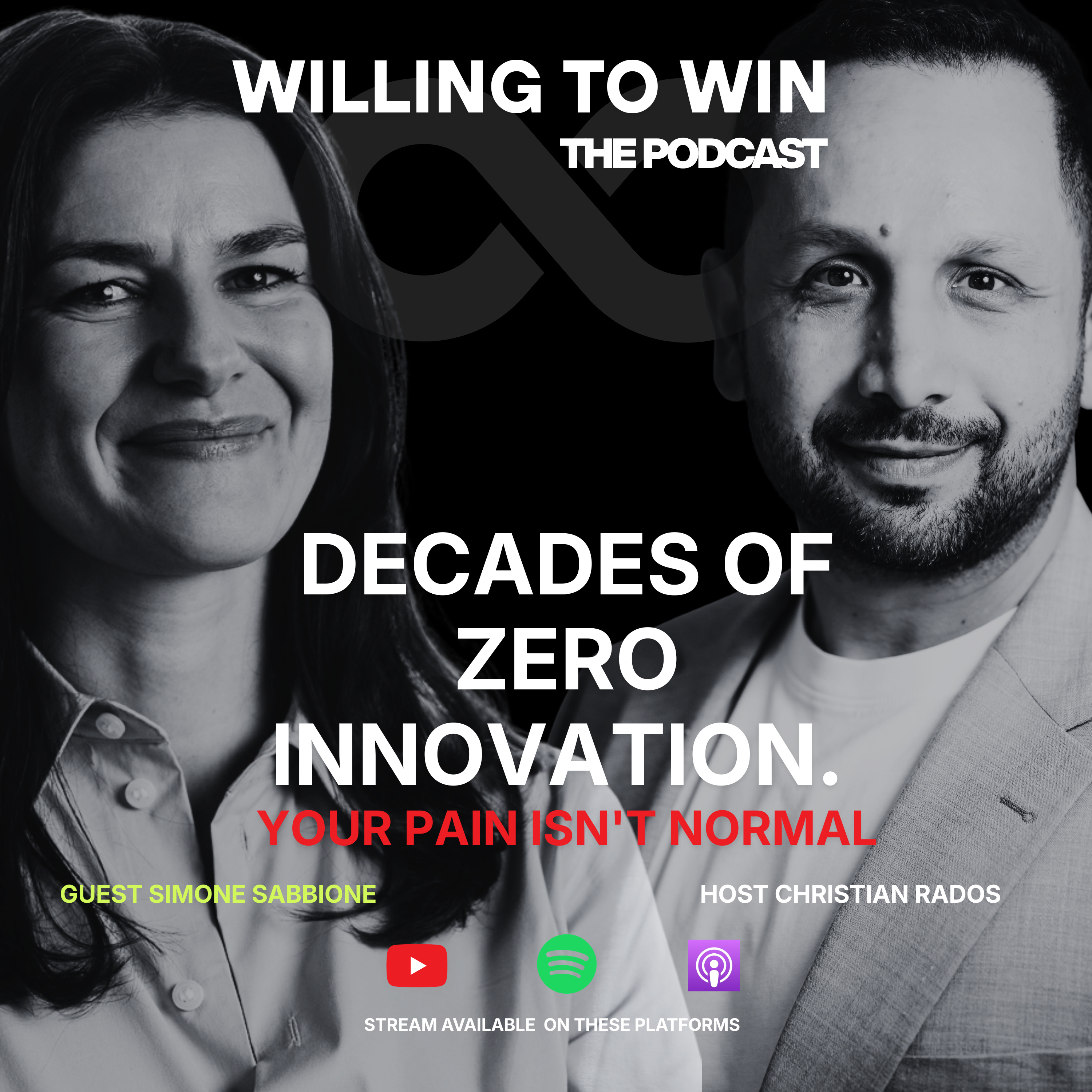
The conversation as it happened, lightly edited for reading. Christian asks, the guest answers.
Christian: Let's do a little bit of time travel. If I'd met you about 10, 15 years ago, what kind of person were you back then? And I'm asking this because, was anything like building Meliodays part of your plan?
Simone: Definitely not. So if you go back 10, let's do 15, maybe even 20 years ago, I was in the midst of studying business administration, and I would say that my dream back then was to become a marketing manager in a large corporate. During my studies, I started applying for internships in such companies. So I got an internship at, back then, Kraft Foods. Now they're called Mondelez. They're very known for their delicious milk chocolate. And that was my first internship. And then I moved on to Audi to do my bachelor thesis.
While both of those jobs complied 100% of what I thought I wanted back then, I realized very quickly that the aspect of politics, who knows who, personal connections and a lot of ego is driving those corporates often, and that did not go well with my personality. What I didn't know back then was what drove me, but I quickly found out it was a very strong passion for justice. This didn't work because I thought that was unjust, right? Someone gets a promotion because they know someone, because their father has some connection, because of those politics. And then often also, in large corporates, many of the employees, if you're not directly a CEO or in the upper-level management, to some extent they're victims to the personal agendas of others. And that's something that really did not go well with me.
So when I finished my bachelor degree and I wanted to start working immediately, I was done studying, I actually joined a large insurance company. I started in sales, and what I liked was that sales is something very honest. It's very transparent. The numbers speak. So independently from who you are, what your background is, your gender, your age, the years of experience you bring in, they all become second of importance to your numbers, to your performance, to what you bring to the table. And that's something I really fell in love with. And that was also one step closer probably to where I am today, but also understanding how important this is to me, that what you do matters. And then I got the opportunity there to recruit a team, build up a team, become this leadership role.
So this was an important part, a step towards Meliodays. I had no idea this is where I would end up, in women's health, never ever. There was no indication yet back then. That was in 2014-15.
And then in 2016 a friend approached me and asked me if I wanted to join their startup. They had a startup in the automotive industry, but the impact was on the sustainability. So it was an electric car, it was planned to have solar covering the entire outside, so the car was meant to be driven by the sun, and it was this whole idea also of car sharing. So the idea behind was much bigger than just a car. It was an ecosystem essentially. And first I declined the job, because I was so happy at my current position at this insurance company, with my team, with my salary. I wasn't looking for change. But after I had the interview with the founders, for weeks and months even, I couldn't stop thinking about this idea, to work for a company where the values and the purpose, what the entire venture wants to achieve, really align with my personal strive for impact and a positive change in this world. And so I went back two months later and asked if this position was still open. It wasn't. I got another position. I started to work for them. And I think that was the second part where I discovered really what is important to me, and what then led me also to found Meliodays. So this purpose in the entire venture aligned with the personal impact I can have.
Christian: You said something about the systemic injustice, and you were missing the purpose that you had back then, and then you said you were happy. Did you have to find your purpose again? What happened in that time?
Simone: Well, I would say that I didn't know yet. It was like this next level I had to unlock by experiencing it, or not even experiencing it yet. But this is exactly what happened when I heard about the idea and I started lying awake at night thinking about what would it feel like to work for something where actually the values align. Because I fight about whether insurances have this higher value, and probably if you get in a severe accident and you have an insurance, yes, it's something good. There is some good to it. But someone had to actually drop this idea on me for me then to imagine what it could be like. I would not have necessarily, not at this stage, come up with it myself, because I felt that what I was missing before was this transparency, honesty in sales, this personal impact I had. So I didn't know about this additional motivation that could be unlocked by working for something I truly believe in and I really want to be part of.
Christian: Right. And I think it also needs a kind of realization. Well, this is more interesting than I had before.
Simone: Yes.
Christian: So what was the story that you told yourself about what is important in life when you created Meliodays?
Simone: Yes. So the idea with Meliodays, maybe I can go into the founding story real quick, because then it makes a lot more sense why we founded this. I was working then for this automotive startup. I made the transition to becoming a human resources manager, and then later on really the head of the entire human resource department. I designed the culture, the organization, and so on. So over six years, essentially, I built that entire company from being the second employee to over 400 employees.
During that journey, because at that company, for me and for the entire team, it was very important to have a diverse team and a very inclusive culture, I encountered the struggles women go through if they suffer from severe menstrual pain at their workplace, but also in their private lives. How many people are affected, and also what a severe condition that can be. And since my brother, and now also co-founder, happens to be a gynecologist, we were on this family vacation and I asked him about it, because we wanted to provide more support as an employer, but I was also wondering why isn't there a better medical solution out there? So we started this conversation just very randomly almost. And then he said the sentence where he said, I think one of the reasons this has not been solved is because men aren't affected and they're still the drivers for innovation, for decision making, for where money flows and so on.
And then this goes back to the anger that gets unlocked when I feel injustice. And I could not believe it. I really thought, I hadn't thought of it. My whole thought process was how difficult would it be to solve menstrual pain from a medical perspective? That hadn't occurred to me. But when he said that and I started realizing this might be a cultural component, this might be a societal issue, that really unlocked some anger and passion and I couldn't believe it. So I started brainstorming out loud. And I said, well, but where does it come from? Do we at least know that? And he then explained that it's essentially a severe inflammation and it's driven by prostaglandins, and usually women who have severe pain have more of those. And I would say, well, why can't you bring them down? Why can't you do anything about it? And he said, well, you can. That's why you take pain medication. That's what it does.
Christian: Can you break it down again? Why is there menstrual pain at all? One question. Second question would be for me: do women right now feel that they have to accept menstrual pain? Or is this changing?
Simone: It is for sure changing, luckily. And hopefully there will be more of this. Going back to your first question, so why is there menstrual pain? Essentially, the amount of menstrual cycles women have today are many more than women used to have. First of all, the start of menses, the bleeding itself, used to start later, also due to malnutrition, for instance. So today girls start having their period as early as 8, 9, 10, 11 years. It's much earlier. It's 3 to 4 to 5 years earlier than it used to be around 50 to 100 years back. And then back in the day, women would get pregnant quite quickly and then essentially stay pregnant or breastfeeding throughout the majority of their lives. And so the uterus was really not going through many menstrual cycles without being pregnant or breastfeeding, which often suppresses the menstrual cycle. So you could argue that there's this aspect of it's unnatural to have so many periods without the purpose of letting the uterus become pregnant, essentially. So this is new to some extent.
But then where does the pain come in? There is the inflammation of the uterus, if there is no pregnancy, to shed itself, which is an absolutely miraculous thing, that there needs to be some inflammation for this process to happen. And this inflammation, as I said before, for some women comes with a very high prostaglandin production, and the prostaglandins drive the pain. But as we see, it's only 10% of women who don't experience period pain. So it is also possible to have this cycle fully working without the pain. The pain is not necessarily necessary. And that's why it's so important that we start speaking about that. And also, if there's severe pain, there could be underlying conditions. So it's actually dangerous if you experience pain and you don't address it, talk about it, or try to find out where it comes from or if it could be solved.
Christian: Thank you. Yes. And what's wrong with how menstrual pain is treated right now?
Simone: That it's being normalized, or it has normalized for so long that if you say I have severe menstrual pain... And I think also that many people, especially men, but also many women, do not understand what that means for women who experience menstrual pain. That can mean two to three days of severe suffering where you're incapable of doing basic daily routines. It often comes with vomiting, with nausea, with barely being able to walk because the pain extends towards the legs. This is such severe pain. And since it has been so stigmatized and something you're not allowed to talk about, it seems like it doesn't exist in our society. But it is so prevalent.
It's just that over the years, if you have this condition and you talk about it, you address it, you ask for help, and everyone you talk to tells you it's normal and everyone else dealt with it, then it gets diminished so much that you just learn to cope. You get creative and you find the right doses of pain medication, even if it's three tablets a day, you just take them, or you get on the anti-baby pill, hormonals, to prevent that entire cycle from happening, even though you then might feel depressed and not happy and all the other side effects appear. But again, that's then normal and that's in your head. So it's an entire disease that has been dismissed and not acknowledged, not the severity of it.
Christian: So you talked to your brother, and how did this idea or this problem awareness, you described it as, you recognized it as injustice, which is a big societal topic that we can address in a second. But you had this conversation. What happened? What happened until you founded the company? What happened in between?
Simone: Yes. So when he essentially broke down that we do know some of the science, at least why this happens in some women and doesn't in others and how it could potentially resolve, my no-brainer question, as someone with a business administration bachelor background, was: what if you would apply this medication more effectively directly in the uterus? I used to have a hormonal IUD. I was super happy with that product, because you have it inserted and then you don't have to think about anything anymore. And I did not experience severe side effects. Many do. So I know how reluctant many women are to take hormones. Hormones are as individual as we are as people. So you really can't say they're good or bad. They're just very individual. For some, they're a great benefit. For others, they aren't.
But the experience of having an IUD was great. Instead of taking a pill every day, which you have to think about, in case you're sick and then you throw up, you need to worry, is the contraception still in place? You always have to have it with you. It's quite expensive. So having this IUD experience, I was like, why doesn't this exist essentially for period pain? And why can't we put ibuprofen in the uterus to really target this prostaglandin buildup where it needs to be? And then those magic words were essentially said by this very experienced gynecologist, who said, well, yeah, that would work.
And that's where my husband came into play, because he was listening in to the conversation. And he said, wait, wait, wait, this would work? And he had founded two other companies before, so he's really the serious serial entrepreneur. And he said, if that is true, we need to found a company, do it. Because I think we are very united by this drive to resolve injustice, and since he was listening to the conversation, I think he felt that same passion in that moment.
And that's essentially the founding story, because we came home from this vacation, we kept talking about the idea, and then we were quite quick to found a company, started IP research. We directly got professional help. And we did have, at that stage in our lives, the financial strength also to kickstart a company initially. And so we engaged those lawyers. We did some IP research and found out it's not just that this product doesn't exist. It's also that this has never been studied, tried. There's no IP. It could be protected. And that's when we filed the IP. And then one thing came to the other and I became full-time in 2024.
So it's really this, again similar to what I said with the other startup, the idea had to come to me to unlock this wanting and this almost willingness to win. I mean, this fits really well with this podcast title, because the willingness came when I saw the opportunity and then I was willing to take it also. And this is now.
Christian: I love that. Yeah. Let me zoom in on that particular moment. Because a lot of people who think about founding a company or creating a company think, I don't have an idea. I need the idea and then everything works out. You have to open up your filter, your mind, and you have to have an open mind about problems and let all those impressions in until it just clicks. I believe you had already that openness to problem awareness and that feel of injustice. Yeah.
Simone: And I do know, I've done a lot of personality tests along my career pathway due to different reasons. And what I've learned also about myself is that one thing that really drives me is curiosity. That's something that is always off the charts when I do those personality tests. So I think it's the combination of this motivation unlocked by this feeling of injustice, or wanting to put things right. And in that case, feeling injustice towards my gender worldwide. That is quite powerful, right? To understand that the entire women's health has been dismissed forever. That was a powerful driver. But then meeting this curiosity, this thinking of, what if, and what if I could be part of it? Yes. That really came together. Yeah.
Christian: I love that. And let's talk about that injustice that you just mentioned. I tried to get my mind around it. Right now, a lot of investors speak about femtech. I think it's a very, very good sign. It's a rising topic in biotech and life sciences. I'm trying to understand why it didn't come up earlier.
Simone: This is a big question. I do think that, how can I say this, it for sure has to do with feminism, in the context of women now demanding being treated equally, and also men demanding for women to be treated equally. There are so many movements that happened before we are now looking also at the health perspective of it. So for instance, the whole Me Too movement, right? That happened years ago. That was suddenly where one woman started speaking up and then suddenly everyone else had Me Too, Me Too, Me Too. So I think this is similar. For instance, it's super interesting with endometriosis, with menstrual pain, with all those, in that case, intrauterine conditions. This is a health issue that was unlocked through social media, starting by women and influencers sharing their stories. This is a health topic we are talking about because patients started to speak up, and it has been there forever. It's not new.
That's what I think is so interesting about the women's health market. It's not a market that has been unlocked through a new technology, for instance AI. With AI, you can revisit so many other technologies and make them better or make them greater or unlock new potentials. Right? There, we didn't have to have this new discovery or new technology to understand there's a market. This market has always been there. We just need to listen. We just need to re-evaluate. If the data we have on humankind is just male data, also female data, and if we look at females, you could maybe go back and redevelop every single medication that is on the market, if you look at what impact it has on women's bodies, and imagine the market, that's huge.
Christian: And I'm trying to understand Meliodays. The core product, it's an intrauterine device to reduce pain.
Simone: Essentially it looks like and it works like a conventional IUD, but instead of releasing hormones. An IUD is, or a copper coil, the device you can put in to prevent pregnancies. But instead of releasing hormones or having a copper wire around, acting as a spermicide, essentially as a contraceptive product, our product releases a very, very low dose of anti-inflammatory pain medication, which is essentially the group of what most people know as ibuprofen. There are different ones and we are using Celecoxib. There's a specific reason for it, because it's a COX-2 inhibitor. There's COX-1 and COX-2 and both drive inflammation, and there's more of the COX-2 actually in the uterus. In different parts of the body, depending, the inflammation is driven by one of the two or both. And thus we think that we can be more effective.
And actually this medication is already approved in the United States for menstrual pain. It's not in Europe, interestingly, because COX-2 inhibitors are also very critical when it comes to the cardiovascular system. So there can be severe side effects if you take the medication at a high dose orally, which we obviously are avoiding by minimizing the dose through the local application. So the drug is already approved for it. Actually you can also go and buy Celecoxib, it's called Celebrex, in the pharmacy today in a tablet form, right? An oral medication. So it's on both markets, but it's for the indication of menstrual pain in the U.S. as well. And we are planning to launch our product also first in the U.S. due to regulatory advantages we hope we can have there. And then also Europe, and then also further markets are planned. Yeah.
Christian: A lot of women right now listening to this, or even talking about that, I think you should accept this kind of pain, which I believe many women still do. But do you feel you contribute to a more just environment right now?
Simone: Absolutely. And the great thing, really what I love so much about my current setup, is that I feel that I'm contributing just by doing it, right? Really, the journey is already contributing. Of course I want to, and we plan to, reach the goal of having this product all across Europe, US and even more markets. But what's so satisfying, and what also unlocks this current motivation, is that I don't feel that the product needs to come to the market for this to be a success. I feel already successful being in a space contributing to that topic, being here on the podcast today talking about it, raising awareness, encouraging more women to talk about it, telling them, hey, if you speak up, the other side will act upon it. You have a power just by your consumer voice in a way. And then also being on the other side of the conversation, on the founding side, being in the moment. There are so many aspects of how our journey feels successful every day, even though we don't have a product yet. And I think that makes it quite rewarding and much easier to navigate also.
Christian: The rewards come also with the price, reducing your private life. It wasn't easy. It wasn't definitely an easy moment when you started the company.
Simone: No, for sure not. But on the other hand, any price or cost needs to be taken into account. It needs to be seen in context, on what you get for it, the value, right? So of course, with this previous company and in my position, it was quite comfortable, especially financially, and I was really in my early 30s in a space where I felt successful on that level, career wise. And then essentially what happened in between is I became a mom, so I left this previous company essentially after my parental leave and then decided to go full-time with Meliodays. I had already not received my full salary for quite a while during being on parental leave. I wasn't on a very long parental leave, so it was like eight months maybe. But then from that I went to having nothing, because if you found, before you have fundraised and capital, you can pay yourself a salary. So essentially I went from a lot to little to nothing.
And that also meant that we had to re-evaluate our living situation and everything. We had to leave downtown here in Munich and we're in the suburbs now, which is something I do not appreciate, if you know me. I really want to live downtown in a nice apartment, and we had to leave all that behind. But at the same time, I know what I'm doing this for. And this cost reminds you constantly, especially if it's your living setup, because you see that you live in it, so you see it every day. It can also unlock motivation, because it reminds you why you're doing this, and this can be positive. It drives you because you want to make it be worth it, right? You don't want to have done or paid that price or that cost for nothing. So you feel, I really need to make it a success now. And so I see it as a motivation, even though it did hurt at the time, and it still does. I still think about the other part.
Christian: What were the hardest moments actually, founding the company, fundraising? Tell me something about it.
Simone: Yeah, I think especially the first year, so all of '24, my two co-founders were still working, my brother Benjamin and my husband Martin. They were still working at their employers. Essentially it felt lonely, because I was by myself. There was no team yet, right? And I came from recruiting and managing teams and always working in a team. So I was really, from morning till evening, I had to drive this by myself. I knew I had those amazing co-founders and they were there for me, but not working side by side. And that made that founding journey in the beginning difficult. If I went to events, I had to go myself. I didn't know anyone. This was a new industry, right? I was very well connected in the automotive space, but I knew no one in biotech or no one in the health industry. And so I had to show up to events by myself. I had to pitch by myself. I had to learn by myself. So yeah, that was, I think, the hardest part. And also doubting yourself, because you don't have this feedback from someone else in the team to say, we'll get through this. I had to tell that to myself, I'll get through this.
What helped me greatly during that time was that we decided as a founding team we would give ourselves one year of me pushing by myself, essentially operatively, right? Strategically I had those sparring partners and the support, but operatively. And if we don't have funding by then, we can't continue, because financially it would not have been feasible. So I knew, it's one year, I'll give it all, and if it doesn't work, it didn't, and then it's fine because I tried. And so that was really this thing that in the deepest moments, where I really felt like this is not working, I'm by myself, what am I doing here, I also knew, keep going, because it will result either way. Either you stop or you become successful. And then we became successful and we closed our pre-seed round.
Christian: And in which time?
Simone: Essentially a year. So I started being full-time beginning of '24 and then we closed the pre-seed round in February '25. It was clear that the round would work out. It's never clear until you sign, but essentially I had the commitment from a couple of investors. I've seen everything happening, you're still at the notary, yeah.
Christian: Looking back, looking back it's always clear, but never before.
Simone: So I think in November, essentially my confidence that we would receive money in November, December of that year, that's where it really hit, and I would say, wow. And then we could hire a team. And so '25 has been so much easier for me, because I genuinely love working with other people and in a team.
Christian: That's what you said. You missed being in a team, you missed leading a team. Do you think that you should have done something differently, like hiring earlier or trying to give out work to other people more, not to have to do everything yourself?
Simone: Well, at that time I could have, of course, if it's possible, considered to recruit without being able to pay a salary. That's possible essentially in the founding space. But also at the time, in a biotech it's different. If you're in any space where you can do any work bootstrapped, it's different, because you can develop yourself and create a value. But in our case, the most crucial part was to contract a partner that can start developing our prototype. Of course, if you're in a university context or academic context, there are different possibilities, but that was my situation. So also there wasn't so much to do. It was more the emotional burden I would have loved to share with someone. But I don't know, I probably could have recruited. But it worked out, so I wouldn't necessarily say today that I would do it any other way. And it was also nice to see how capable I was, or I can be, on my own. I didn't necessarily prove it
Christian: To yourself. Prove it to yourself a little. For sure it was an identity shift that you went through. It was a shift from being a CHRO in a big company, leading people, to a startup entrepreneur. And I think you made a very important first move, having people in your team who are complementary and not other, same, same copies of you. I think that was the most important part. But still, that identity shift from manager to entrepreneur, is this the emotional burden that you pointed to?
Simone: Well, I would say the good part, which wasn't so much a burden, was the fact that with this other startup, since I joined so early, I had seen what's possible, going from nothing to an IPO, raising 300 million, from everyone telling you this is absolutely impossible. So I had this belief in me that I can replicate that in a very different setting, in a very different way, very different company. But I've experienced that the impossible can become possible if you want it to. So I think that was an advantage, having experienced this before and coming in with this experience and skill set to some extent. The hard part was doing it by myself in the beginning, because of our setup. I just said that at that point we were a family. If it wouldn't have been for our child, we could have decided both of us to go without a salary for a while somehow and just live from savings and do this together. But that was not the setup we could afford. We needed one salary at least for the family. So I think that was the burden and the higher price.
Often if you think about a startup, how do you imagine a startup? It's those two students locked in a room doing nothing, sleeping there, just working on something day and night. And this component was missing in my journey. But there were those other components of skill set, experience, knowledge, and also the joy of experiencing this while also already having a family, a career, a child. I didn't feel like this is all I have in my life, so the pressure of this must succeed also wasn't as strong, which I think is an advantage, because the pressure is less. I had this other part of my life that I achieved already where I felt happy.
Christian: One wisdom I would like to pick out is choosing your priority, choosing your story. You had a couple of different narratives you could pick from, like when this doesn't work out I go somewhere else, or I stay in my safe harbor, larger companies. But you picked a different story. You said, I'm going to solve this injustice, this is my time now, and I saw it can work out to work on impossible things, and it will work out. That conviction is something that I feel carries you.
Simone: Absolutely, 100%. And also coming back to what I said earlier, often when I hear, do you think this is going to be a success, I think it's a very different mindset. Just contributing to the space, just by anything, is already something important. And that's something, because if you feel already successful, no one can take that from you. And it unlocks a lot of confidence and motivation. I think that's just a favor I'm doing to myself. That sounds maybe odd, but I really do. Because then I don't lose myself in this, what if it doesn't work out, it was a waste, or what if it doesn't work out, this was for nothing, or I lost, or those are the most valuable years of my career, I could spend somewhere else, I could make a lot more money. Then you come from this mindset of scarcity, where you're losing, while I just believe I'm winning.
Christian: Who are your mentors? Who do you listen to?
Simone: Many. I would say that through my entire career, and probably also because I started with this sales job in insurance, that's so tough. You need to become mentally stable to survive that. And so also back then, Ergo, this company, also helped us with a lot of, to bring yourself in the right mindset, to deal with no's, that people say no to you. There are so many skill sets I learned early on, and also many mentors I met who've been through that. There's many, and some of them no one would probably know, so I don't even know if it makes sense to mention, but it's a lot of mindset work.
And then later on at this automotive company, since it was my responsibility, in a broader spectrum, to also implement a healthy company culture, a very agile organization that gives a lot of responsibility to the employees, I got the chance to work with many coaches, not just for me but for the company. But I always learned, of course. And one of the most valuable coachings I had was to work with horses. I don't know if you've heard about it, but yeah.
Christian: Horses, yeah.
Simone: Yeah, in that case it was horses. And it's so amazing because you learn that in the end, honesty is, because animals can't speak, right? They will mirror whatever they feel you communicate, and that's essentially your body language, that's your intention, your determination. If you go in contact with a horse and you're very determined, it does what you want. If you believe yourself, the horse will do what you want. But if you have doubts, if you are unsure, if you're lying, it will reflect that. And so there's this coach, and you're with the horse, and essentially the coach looks at the horse, and there's this becoming very honest in your communication. Things like that. I think all those different mentors, situations, coaches have helped me to develop this mindset.
Christian: Very good. You said honesty. For me it's also, can you be honest when you do fundraising? Can you?
Simone: It's a very good question. Yes, yes, you can. The first answer is for sure yes. The interesting thing about honesty, and okay, this might take us in a different direction, but I
Christian: You have to be optimistic, of course. You have to be optimistic, otherwise nobody believes in you if you don't believe in yourself. That's the
Simone: The answer. This is exactly what I wanted to land at. Investors will invest in you if you believe that the story you're telling them, you believe you can achieve it. It needs to be something you find feasible. Since any investor essentially invests into something you're projecting into the future, there's no real evidence if this is going to work out or not. And if you look at all the super successful ventures retrospectively, they went against all odds. So no one can prove you wrong with a business plan that projects into the future. So the question is if you believe it yourself, and if you do, you're being honest, right? If someone asks me today, we're currently raising our seed round, if investors ask me if I believe we can execute this business plan, I would say, with the necessary resources, yes, I can, and I 100% believe that. And that's why we're fundraising, right?
So yes, I believe in our business plan, and it might be ambitious, and you can be honest about that as well. I think you assume that every experiment you do in the future will first fail and you need to redo it three times, but that's also something I wouldn't want to invest in. Because if someone assumes already they would fail three times, are you the right founder for this? So yeah, I think you can be very honest about that, and I think that's why we're fundraising, right? So yes, I believe in it. You should be honest, and you can be honest and ambitious. There's no or.
Christian: Yes, I really like that. What's the purpose of fundraising? What's the purpose of an investor call? It's selling a conviction in the end.
Simone: Absolutely. And at some point that's also important, I think, when it's about what's realistic and not. The day you found your company or the day you have the idea, there's no trajectory, right? There's no history anyone can hold you accountable to. But the more you grow, or the longer you exist, there's a history. There's a past you can be measured by. So if you can say, well, we've raised our pre-seed round, those were the milestones we wanted to hit and we did, and now we are raising seed and this is what we are planning, the likelihood of someone believing you can achieve that, if you did already once, is much higher. This gives you credibility. And that's why I think it's also important to perform, and where some realism comes into any kind of future projections, where also investors will identify very quickly if what you're saying is in that context feasible or not.
Christian: Yes. What's your plan? You talked about growing. What's the plan for Meliodays?
Simone: So maybe first where we stand currently, in order to then understand where we're going. As I touched upon already, we closed our pre-seed round beginning of '25. Then we produced our first final prototypes, essentially functional prototypes. We did our first quick clinical study, we have in vivo data now. We just finished an extensive survey with gynecologists and following a very extensive survey actually with 800 women, also patients, but we didn't know that at that time. We just asked 800 women what they think about our product. So a lot of market research was going on in order to generate data that then will convince investors to invest into us.
Which, by the way, is also something super interesting in the women's health space: we first need to prove our problem with data. Let's assume you're in the cancer space. No one would ask you the question, well, would anyone want to use your medication? Because if you're dying, you would probably use almost, or try anything that could work for you. In our case there's a lot of doubt. Is the problem real? Is it as big as you say? And would anyone want to have your solution? And that's just the fight, because it's a different context. We were creating a lot of data around that, hiring personnel.
So our next steps now with the seed round are to finalize our device, a functional prototype that then can be scaled or go into manufacturing. Then you have all those regulatory processes you need to establish, and we had a first pre-IND meeting with the FDA. We are now planning a first meeting with the EMA, to also understand what are the requirements to get our product approved in Europe. So there will be a lot of regulatory work, a lot of advancing of the product itself, and many more preclinical trials coming up. And then we are aiming, with the seed money, to be able to raise our Series A in order to start first-in-human trials. And that's really the critical point, because the interesting part also is that for dysmenorrhea, so severe period pain, there is no animal model, right? We need to get into humans to prove how effective our product will be. In many other biotech products you can see efficacy, so if it works, much earlier, and this is also an additional hurdle with our specific product we have to overcome.
Christian: How does patient recruiting work in this case?
Simone: It works as in any other case. You have certain criteria. Our endpoints will be pain reduction. So you have a visual scale where patients essentially record their menstrual pain over three months, their baseline essentially. So they say, my pain is at a seven or eight every month for X days. They record that, then they will have our device implemented, and then they will record for another year. So the earliest timeline then is like six months, because we want to be approved for more than a year. For a year they will record how this device is then positively impacting their pain, if they come down from seven to eight to five to six, or to two to three, or if the pain is gone. And that's essentially our work.
So you need to have certain criteria for those patients, and then you can ask them if they would want to participate. And actually this is quite interesting, I get inquiries from women wanting to participate in our trials every week over LinkedIn.
Christian: I can relate. I can understand. Yeah.
Simone: Yeah. They read about our product, and it's, are you in clinical trials? I would love to try. I would love to be part of this. And this is also what we did. When I said I feel successful today, this is why I feel successful, because people reach out to me, and it's, you give me hope. Just by founding this company, talking about it and doing something in that space. And that's probably very true also for anywhere in health, maybe more specifically in women's health, because it hasn't been done before, right? In cancer there are so many companies trying to solve those issues forever it seems, and in women's health it's new to some extent.
Christian: You know what's really different, that you are so close to the patients. A lot of companies don't have their conversations with their patients at that level.
Simone: Yep. It was very important for me from the beginning of my career that this product will be developed in co-creation, that's what we call it. Because if you go in history, the amount of products that were developed by men for women without involving them in the process, asking them if that's a solution for them, asking them what their problem actually is.
Christian: Crazy. How crazy.
Simone: Yeah, exactly. Because of how our world was structured for so long, there were no women involved in innovation processes, and so men looked at problems from their perspective, from their realities, and then came up with solutions and then were very surprised if they didn't work out, to put that mildly. That would maybe be the nice way of saying it. If not, they felt that women were not open to adoption or were very ignorant by not using the innovation. But what happened actually is they missed the entire point of where the problem was. This is why it's so important.
And actually, when we did our first patient survey, which I talked about earlier, the person and the company we worked with to do that, a market research institution, they said it's super unusual that you do this, going to this step of analyzing and understanding patients this early in the process. No one does that. Usually companies approach them when the product is done and now they want to understand how to sell it. That's when they ask the patient. But to be honest, this first patient survey was crucial for us. If it would have come back and patients would have said, pain is not that bad, some say they need a solution, we don't, I'm happy with my ibuprofen, and also I would never use an IUD, well, maybe this would have been a good point when we would not have gone forward with this venture. So it's very important for me to develop a solution I know is much needed.
Christian: Yeah. Very good. Thank you. If we meet again, let's say in five years, what are you proud of having accomplished?
Simone: Well, hopefully having this product in the market. In five years that is maybe ambitious but realistic, that the first patients are using Melio-1 and can say the sentence that I want to experience in the clinical trials: a woman who has suffered from period pain her entire life, or been on the pill and experienced severe side effects, says that for the first time ever, I knew my period was coming and I started bleeding and there was no pain. And if I experience the moment where I can talk to that patient who tells me, you made this possible, then yeah, this is already it. And then from there, of course, the market entry follows. I know this is another hurdle, but I really hope in five years, if we talk again, that I can tell you about this conversation I will have had with the patients.
Christian: Great. Looking forward to it. And last question, or last piece. If you think about your, let's say, eight-year-old self, what would you recommend her?
Simone: That she should not accept the status quo, and that just because things are how they are does not necessarily mean that they are good or that they can't be changed. I think that growing up as a girl, there were many things I just assumed belong like that. Growing up in a very male-dominated world, it's just how it was. And there are many aspects I just thought this is right because this is how it is. And going back, there are so many situations I would today wish I could have acted differently, just by believing this does not need to be the way it is.
But I also don't know if you're eight years old, if you're capable of standing up. No, probably you are. I don't know if I would have been. Let's put it that way. There are for sure other eight-year-olds who do already change the world, and I don't know if I would have been that. But maybe if I had known and understood at eight years, I would have been able, in maybe small steps, to apply it when I would have been 10, 12, 15. You know?
Christian: Very inspiring. Thank you very much. It was a pleasure talking to you. So many topics. I have a thousand more questions actually, but I think we can keep it for next time. Thank you very much. It was a joy. And looking forward to seeing you next time again.
Simone: Thank you so much, Christian, for having me.
Christian: Bye-bye.
If you think you need to talk to this guest, reach out to me and I am happy to make a connection. Christian Rados, christian@rados-recruiting.com
All episodes and the problem pages