
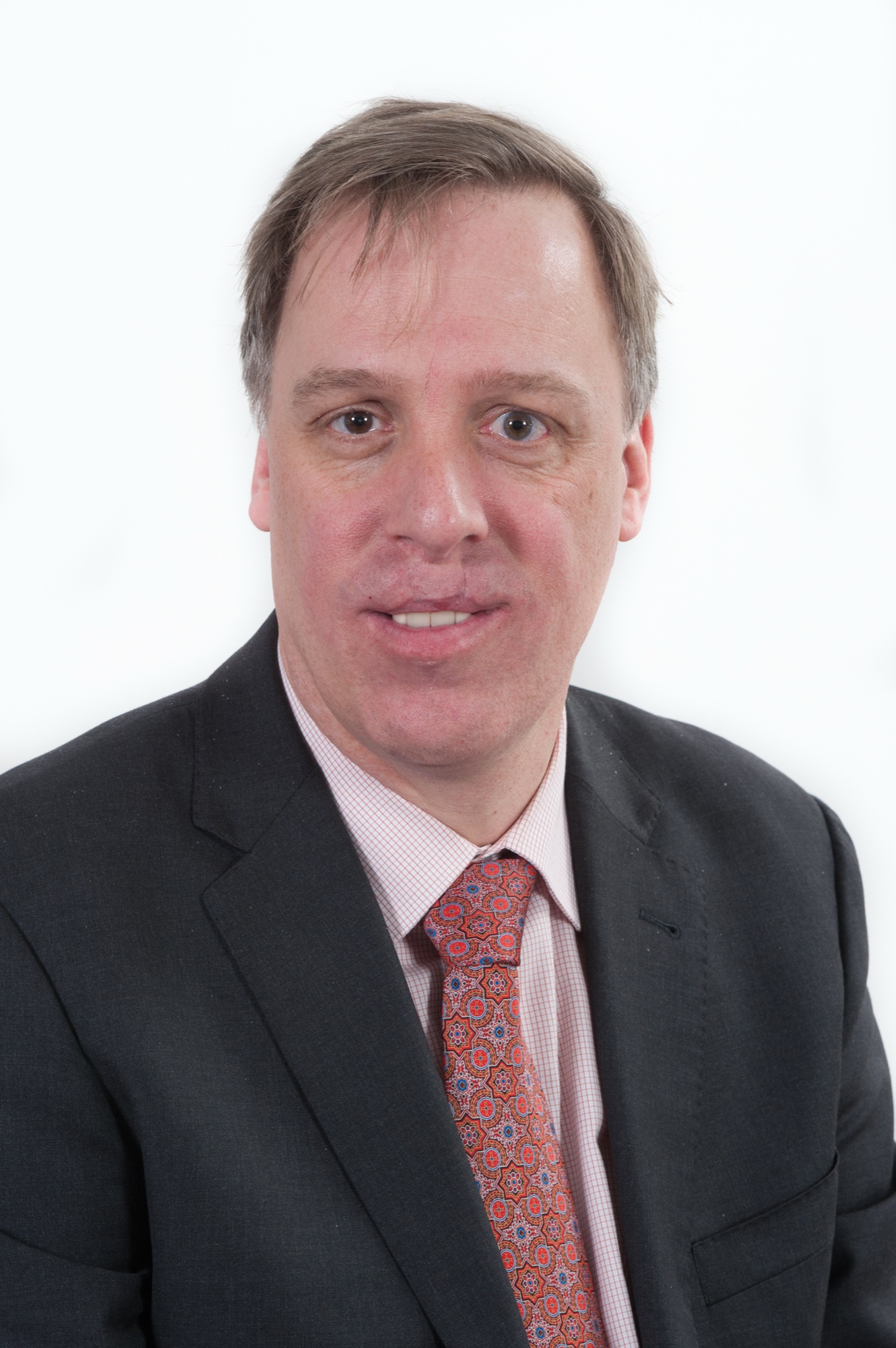
The conversation as it happened, lightly edited for reading. Christian asks, the guest answers.
Christian: I'll start with your childhood. Where did you grow up?
Tony: Yes, I grew up in Montreal. So back in the mid-60s.
Christian: So how was life back then?
Tony: Yeah, I had one sibling. We were very focused on, actually, not science. Both my parents, one was a lawyer, one was a businessman. So science was really not the main thing. And going about stuff, as you and I have talked about, I had a relatively challenging childhood. I was born three months premature. At the time, this is 1965, weighed about a pound and a half. So that's about 800 grams, or a bit less than 800 grams. And I was the youngest child in the country to survive at that age and weight.
And so that in and of itself was one thing. But then following up on that was about 20 years' worth of operations, speech therapy, all sorts of things. You imagine it, seeing doctors two, three times a week, every summer, every Christmas vacation going in for an operation. So that's really what took up a lot of my time. But on the other hand, as I reflect on it, I probably wouldn't change a thing. And we can get into why, right? Because I think that's part of what you're trying to get at with your podcast.
Christian: Go ahead. Tell me, why wouldn't you change a thing?
Tony: Yeah, so obviously, with all of that, it's just challenging to make friends. Do all sorts of normal things. My family were extremely supportive, right? So that was great. But I think all of that gave me an inner resilience to really be determined to make something of my life. I kind of felt, and I felt this as a young child, I shouldn't be here, this is all extra, let's make the most of it, right?
And facing that adversity, you can't do this, you can't play sports, you can't do that, turns out I'm actually a very good athlete. I play a lot of sports. And so it's really overcoming that adversity, when the system or people say, oh, you can't do this, you can't do that. And so it's part of me, right? So it's a bit of a superpower, I guess.
Christian: Resilience always comes from doing very challenging, very tough things, very hard things. It's easy to say afterwards. I think everybody would agree. It's easy to say afterwards, I got my resilience from that. From any story you can imagine, right? But in the moment, it feels like the worst. Do you remember one or two stories, interactions with any other kids or with anybody who told you you can't do something?
Tony: Sure. I had doctors who said I wouldn't be able to play sports, hit a ball. Well, I played tennis, I played basketball, I played football. At school, kids used to, and again, keep in mind, this is the 1970s. It's probably changed for the better now. Kids used to bully a lot, et cetera, right? And I think what really got me through that, obviously, as you say, once you've gone through it, you build up that self-resilience. But I think there's also my family, particularly my mother, who provided that real foundation in that you can do anything, particularly at a young age, right?
Christian: What sentence? Is this one sentence she... Do you remember? You can do anything, or was there something else you remember?
Tony: Yeah, no, she... You can do anything, and she basically wouldn't take no for an answer, right? And she had a healthy skepticism in terms of what, quote, experts told her, right? And that's something that I've kind of gotten through that process as well, right?
Christian: I think there's a lot of frustration also on your side as a kid.
Tony: I'd never get invited to birthday parties or things like that. But after a while, I just did my own thing. I was very fortunate to have an extended family that was very supportive. And so that was my nucleus, and not until I was in college did I really start expanding, making friends and so forth, right? But then there was a point when I just had the confidence to do all the things I'd wanted to do before, right?
Christian: Right. So your parents were not scientists, but you picked science.
Tony: I actually picked it because it was my worst subject. And again, maybe this has to do with resilience. It was two things. One, it's my worst subject. I did really well in history, geography, math, et cetera. Not that I did poorly, but I also wanted to do something that would have impact and could give back, right?
So all of those years, in aggregate, probably two or three years in hospital, I got to see how fortunate, with all of my challenges, I was still very fortunate. I had a stable family, great, great home. Great education. But I could see all the other people who were not as fortunate, and so I wanted to do something to kind of give back, particularly to the health care system. And so that's what really got me into science.
Christian: How is that possible? How is it possible that somebody who went through the story you went through creates a meaning, hey, I'm actually fine now, I want to give back? I really try to understand that.
Tony: Yeah, I think I'm an optimist by nature. And optimism combined with the ability to take risk, right? We can talk about that later. Taking risk, optimism, and the belief that I can do it, right? And if you've got that conviction and you have skill, you can do pretty much anything you want, right? And you might as well challenge yourself, because one of the things that came out of all of that early experience is we all have a finite amount of time. And as you get older, the biggest thing for me is, how do I want to spend my time? What do I want to work on, right?
Christian: There's a poster quote: do the hard thing, choose the hard thing. It's fuzzy usually, but in your case you really chose your worst subject because you had an idea. You had an idea, well, this is getting me somewhere, right? This is really interesting. And what kind of kids, what kind of people did you see particularly that formed that decision, I want to help them?
Tony: Back then, when I went to hospital for operations, I'd be there for a couple of weeks over Christmas, a couple of weeks over the summer. There would be common rooms where you'd have eight beds in a room, right? And so you would get to talk to all of your bedmates, right? There were Native Americans who had all sorts of health issues. There were folks who were older, who had weight issues, diabetes, all sorts of things. It was a whole mix of different conditions. Right.
And you just get to talk to people, and you ultimately realize, and you'd see their families coming to visit them, and you realize the most important thing to people are two things. It's their family and their health. Right. And so I was thinking, I can't do much about the family part, but I can do something about the health part.
Christian: Yeah. So you ended up studying science and started working.
Tony: I did my undergraduate in microbiology and immunology. And then I decided to, instead of going to medical school, I got into med school, I decided to go to graduate school. I did my PhD in immunology at Harvard. So I went down there on a scholarship. And that's when I really started my scientific career.
Christian: Right. Were you always in Canada at this time?
Tony: Yeah. So I did my undergraduate at McGill. And I lived at home, walked to school, did all of that. Started doing lab work in my second, third year, in the honors program. And I actually published my first paper in 1986, way back when. But, yeah. And then when I got into Harvard, that's when I moved down to Boston.
Christian: And after the PhD, what were you thinking?
Tony: Yeah. So after the PhD, this is the early 90s. The conventional thing to do at the time was to do a postdoc, think about academia. And so that's what I ended up doing. I did a postdoctoral fellowship at the University of Cambridge in the U.K. And my wife at the time joined me, and she ended up doing her PhD there while I was doing my postdoc. And then I got a fellowship to start down the academic path.
And so I was there for about four or five years, six years. And then I really started to think about, do I want to do the academic path? I was starting to get grants and stuff. Or do I want to do something more applied? And again, this is the mid to late 90s. There really wasn't as good a clear path for academic scientists to do translational work.
And so as luck would have it, I was going back to Massachusetts, my wife's family's from Massachusetts, we were going back to see her family. And some folks I knew at Biogen said, why don't you come by, give a talk on the work I was doing. And then they offered me a job at the end of the seminar. And so then it was a question of, do I do the academic route or do I do something more applied? And so that's where I opted to go down the industry route.
Christian: The industry of biotech. It was not that old at this time.
Tony: Actually, but biologics wasn't. I mean, when I graduated in 1993, my PhD supervisor, Tim Springer, who's now founded a lot of companies, he offered me the first job at his first biotech called LeukoSite. And I foolishly said no, I'd rather do the academic thing. I mean, that turned out really well for him and for the field. But again, by the time I was back in Boston in 1998, it was with Biogen. But there were still very few biotechs. There was maybe a couple dozen, right? It was still a very small community. Most of them were either Genentech, Genzyme, Biogen, and then a bunch of smaller ones.
Christian: Did you lose sight of that goal of helping others in the decision, should I stay in academics or not?
Tony: No, not really, because the academic piece, kind of doing a postdoc, is important. You learn from different mentors, different things, right? And so I think from a training perspective, it's very useful to get those different points of view before doing either academics or doing industry, right? So I think that was super important.
And actually, my postdoctoral advisor gave one piece of advice, which I think is pretty interesting. He said, biology that doesn't give you a tenfold effect is not worth looking at. So basically, don't think about incremental things, but work on really tough problems where if it works, you're going to get a 10X type of benefit. That's pretty useful advice as people are thinking about doing something new, right? So it's taking that risk to work on something that's important, right? As opposed to incremental.
Christian: Did you instill that thought later in the teams that you built?
Tony: Yeah, yeah. It was that thought and it was also another thought, and I've told this to my teams, particularly in a startup mode where you don't have a rule book, you don't know what is supposed to work, what's not, you're basically writing the rule book. A good experiment is not one that succeeds. A good experiment is one that gives you a yes or no answer. Because a no answer can be just as important as it works. If you get a basically equivocal answer, then you end up redoing the same thing over and over again and you don't make any kind of progress.
Christian: How was that for you as a scientist coming from academia and now having to build teams?
Tony: When I made the switch from academia to Biogen, I started off as what they call a Scientist II, so one level above just a new PhD. And I had one research associate. And so I started off with a team of myself and one person. We did a bunch of work, we worked on different programs, ultimately I ended up leading programs, larger groups. But it's really about, how do you manage people? And that's probably the most important aspect of everything. You're doing it with a team of people, and how do you communicate, how do you challenge, how do you mentor people, right?
And from that perspective, I was very fortunate. I had a really good mentor at Biogen who really helped me understand the whole business of biotech, which was super helpful. And I've used that same ethos. My job as a manager is to make the best experience for my direct reports, right? I'm there to provide them the best advice even if it might not be 100 percent the best advice for the company, right? You're really there to mentor them and see them flourish, right?
Christian: What did you get out of it? Shaping other people, mentoring them?
Tony: It's the knowledge and seeing them grow, right? So a range of folks who I've mentored, supervised, have now gone on to be CSOs, CEOs. Some of them, my research associate, the one I started out with at Biogen, he went from a research associate, now he's a director-level scientist, right? And I've helped him improve, and through experience and challenging, he himself has built up a wealth of experience that means that he can do something that he might not have thought possible when he started, right? So it's about seeing folks you work with grow and seeing them take on new responsibilities and thrive in those settings.
Christian: But about yourself, you said you like to see people grow. What does it do with you?
Tony: In terms of how it makes me feel? Yeah. So to me, if I look back at all the companies I've worked with, if it's Alnylam, if it's Ablynx, if it's Moderna, some of those started, Alnylam and Moderna started off with less than a dozen people, right? And it's really the journey, the journey with those folks in developing new medicines, right? That's great that we now have RNA interference, we have mRNA technology. We built those technologies from nothing, my teams and the people I worked with. Doing that, the achievement's great, but what's even better is doing the work with those people and all of the ups and downs of trying to get to the right answer.
Christian: You just mentioned that you were the founding CSO of Moderna. At this time they had less than 10 people. Tell me about the time you joined the company.
Tony: Yeah, so just to skip back, I went from Biogen, joined Alnylam, again that was literally six people, one room, one lab, and we built that up from six people to several hundred people, put products into phase 1, phase 2. Did that for seven years, did a little bit of work at Tolerx, and then joined, as you said, Moderna. When I joined there were maybe about 10 people. Stéphane Bancel had joined as CEO, and Susan Whoriskey was helping on the IP business strategy, but there was no one doing the science. From a leadership perspective, lots of very talented scientists, relatively early in their career. And so I came in as the founding chief scientific officer and took over all of the scientific oversight of mRNA.
This is back in 2011, right? So this is a couple of years after Karikó and Weissman published their groundbreaking work in 2005. But really, apart from them, no one in the field had really taken up mRNA. At that point it was considered too unstable, too short-lived in terms of its expression, too difficult to work with.
Christian: How was it even possible that you joined as a founding CSO? There are a couple of origins of companies coming to life, right? Either it's academic, scientific driven founded, or it's in a kind of accelerator program or a spin-off, or there are five different origins.
Tony: So the original founders, there were four founders. There was Ken Chien, Bob Langer, Derrick Rossi, who were all academics, and then Flagship were also a founder, right? So they were the four who founded the company and then they brought me in very early on to basically put the foundations of the science together. At that point when I joined, Derrick Rossi had been the main person along with Ken Chien, who had done some mRNA work in their labs. They published a Cell paper. It was all in vitro work, right? So the challenge was, okay, it can work in vitro. How do you make it work in vivo? How do you deliver mRNA to a cell? How do you make it more robust so it can actually become a drug?
Christian: Why do you think they needed you?
Tony: So I think by that point, I'd spent seven years at Alnylam developing RNA interference. I ended up being VP of research. I invented a variety of drugs, but also led all of the RNA delivery work. And that led to the development of lipid nanoparticles. I'd worked on chemistry, chemical modifications to dampen toll-like receptor activation. So all of it made sense.
I think part of it as well, to be honest, was that at the time Moderna was six, eight people. People at Biogen were saying, why are you joining this startup of five people? And it was because of the people involved and because of the potential impact the technology could have. And same thing at Moderna. It was very clear that if we got mRNA to work, it could be transformative.
Christian: You said you joined because of the people and because of the vision it represented? So tell me about that vision that they had at this point.
Tony: Yeah. So early on what Moderna were trying to do was, with mRNA you can make any protein. So instead of producing proteins, purifying them, let's use mRNA, make the protein in vivo in the body. And we can do that a lot faster, a lot cheaper. That was the original vision. That's what we raised funds to do. I was brought on to do that. Pretty early on, within about six, 12 months, it was clear that was going to be a much harder path.
We could get proteins expressed. But the two things that were difficult were to get enough protein expressed for long enough. If you're making a protein drug, a protein can be quite long-lived, and mRNA will only express a protein for a couple of days. So that was one issue. And because of that, you have to repeatedly deliver the mRNA. And so the delivery system, we were the first ones to identify lipid nanoparticles as the delivery system that was best for mRNA delivery.
But if you repeatedly dose that, you ended up with toxicity. You ended up with some innate immune activation that led to decreased expression of your mRNA upon repeat dosing. So it was very clear that the therapeutic, what we were funded for, what we had all the money for, was going to be a difficult challenge, not insurmountable, but difficult. And that's when, as CSO, you have to do the day-to-day operations, but you also have to look strategically and say, is there a way to pivot?
And that's when my background in pandemics and in vaccines from Alnylam was helpful, because I could see all the attributes that were a negative for therapeutics, short-lived, and all of that are positives in a vaccine context, because you can take a viral sequence, as it turns out, make a vaccine to that in a day. And that short-lived expression is actually a plus in a vaccine context.
So I ultimately had to... it took me about two, three months to convince Noubar Afeyan, the chairman of Moderna, and Stéphane Bancel, the CEO, to even do a little bit of work on vaccines. Because they're like, no, we're focused on therapeutics. That's what we're doing. And I had to convince them, look, the science is telling us it will work in vaccines. Just let me prove it. And ultimately, to their credit, they did, we got the data and it worked really, really well in a vaccine context.
And so that's how that got started, because I'd worked on Ebola and a bunch of pandemics in my previous job. I also could see immediately, and this is 2011, 2012, 2013, the potential for mRNA as a pandemic preparedness platform. And that's ultimately what the company shifted to. And actually, therapeutics has still proven relatively difficult, 15 years on.
So that for sure was the right pivot to make. I think now you can see in the mRNA space, without getting too scientific, CAR-T is another place where that's working really well. And I won't get into the science, but it's about how you make a short-term mRNA expression have a long-term biologic effect. Vaccines do that, CAR-T does that as well, but traditional therapeutics of using an mRNA to just make a protein is still proving difficult. And that's why you have other folks doing circular, self-amplifying RNA to try to increase the duration of action. So I think that will ultimately be solved, but from a Moderna perspective, that pivot was absolutely the right one to do.
Christian: You also had a couple of patents that you filed during the time of Moderna. And you stayed overall about three years.
Tony: I stayed for just around two years.
Christian: Do you think you left too early?
Tony: Yes and no, right? But the technology was really great. I love the technology. I loved working with the people there. There were some... the way Moderna was structured, particularly from a stock option perspective, made it difficult to stay. Because in a lot of startups, you can, in essence, buy all of your options upfront and then over time they vest. Right. At Moderna, they didn't allow you to do that. So you could only buy your options as they vested.
And as Moderna grew, and we were quite successful at raising money, the amount that the company was worth on paper increased exponentially. But in the U.S., if you buy your options, you're paying tax on that difference. And so ultimately it's getting financially too costly. And at a certain point you have enough eggs in the Moderna basket, right? So then I'm looking at it from a portfolio perspective. I've got enough eggs in Moderna, if that works, great, let me go work on something else.
And I also wanted, from a career perspective, and hence why I joined Ablynx, to get experience not with a platform from day zero to phase 1 or phase 2, but take a platform that already had a product in phase 2, and how do you advance that to approval? How do you leverage a more established platform and build out a pipeline of products? And so that's why I made the move to Ablynx.
Christian: Two words that I note here. That is risk, the way you perceive risk, putting all the eggs in a basket, that's one thing, and also doing risky bets on vaccines at a point when you didn't find it risky, but you had to prove that it's worth going for. For the other part it was risky. And the other word is identity, early stage or late stage. You wanted to find something that was risky and you had to go for something else. Let us start exploring a little bit how you perceive risk and what kind of risk type you are. What do you think?
Tony: Yeah, so risk is interesting, because I've never been averse to risk, right? But that doesn't mean that you just jump into anything, right? When I look at the choices of going to Alnylam, to Moderna, it was working with really good people. And so if, for instance, Alnylam hadn't worked out, there are six people, let's say we didn't get funding, then you would go and find another job, right? And so part of my risk profile is I'm pretty confident that I can go find another job.
The other rational part is joining Alnylam with folks like Phil Sharp as a founder, John Maraganore as CEO. If it doesn't work out, people aren't going to say, well, why did you join that company, right? And so it makes it a lot less risky from a career perspective, right? And the same thing with Moderna, being able to work with Stéphane Bancel, with Flagship, Noubar. If that hadn't worked out, I'm sure something else would have happened and people would have understood why you made that jump, right?
Christian: It's even a leverage somehow. The big names. All right, and how do you see risk now?
Tony: I still see it in the same way. Right now I am doing a variety of board roles. I chair multiple companies, sit on boards of directors, and I do that really for three reasons, right? One, as I said, to work with really good people. To work on really transformative science, again science that can move the needle 10x, right? And being able to do a range of things is really interesting from an intellectual perspective. It's not just one thing. I've got two AI companies, I've got a cell therapy company and an mRNA company, a radioligand company, a whole variety of companies, all of whom I work with. So for me it scratches those three itches, which is impact, working with really great people and cool science, and being able to look at a variety of different things, right? Which hopefully I think will all be transformative.
Christian: Did you choose those companies deliberately as a form of risk proliferation or risk...
Tony: Not deliberately. I get offered and see a lot of things. And so I am making sure that they don't compete in the same space. So that makes it a lot simpler. So it's still a diversification anyway, right? So it's diversified from that perspective, and then there's a little bit of geographic diversity, public, private. But it's mostly about, is the science transformational, and do I want to work with these people? Because ultimately, sorry, just to digress, it's people that find the solution. So at Moderna it was us as a team finding the pivot to vaccines. In Alnylam it was us finding the pivot to lipid nanoparticles and ultimately then chemical conjugation to make that successful.
So even as an investor, I do a lot of private investing myself, science is important, but far more important than science is actually the team. And because it's a team, there's no company I've been at where the original scientific plan, business plan has worked. It's always been, get a little bit of data and then how do we pivot? And it's the team that makes that pivot successfully that ends up winning.
Christian: What's your view on risk management? And team, how risky is it to have the wrong people in the team?
Tony: Very, right. And so hiring the right type of people is hugely important, right? It's the most important thing. When I was CEO of Evox, I would interview every person, regardless of role, sometimes just for 10, 15 minutes, just to make sure there was a fit from a culture perspective, from a mindset perspective. So you want folks, particularly in startups, who are comfortable with ambiguity, right? And some folks aren't comfortable with that and that might not be the best place for them to thrive. It's all about finding the right place for each person to thrive. Now that doesn't mean you hire 10 people with all the same mindset, because that also leads you down a path which is not good as well, right? So it's about really creating the right mix of team, right?
Christian: You just mentioned the risk for the culture in terms of ambiguity, uncertainty. That's one of the most important traits that you can have in founding teams or in early teams. But there are also other risks, right? When you think about team, did you have a moment or a period in your life when you were together with the wrong team?
Tony: Yeah. And team is interesting, and the culture piece is really interesting, because in an early startup it's actually simpler to get the culture right. Once the company gets to 30, 50, 100 people, that's where you can sometimes lose that culture. You bring in people who are very experienced, have a great CV, but they might not have that culture fit, right? They might have, to broadly generalize, a big pharma mindset, whereas you're still a biotech, or vice versa, right? And so that's, I think, where it's more difficult, right?
And in companies you often have a half dozen people who really set the tone for the organization in terms of culture. And those people can be at any level, right? The people who can kill culture with the wrong person, the CEO or CSO, if they have the wrong culture, that can kill it the whole way down. But to maintain that culture, it could be research associates, it could be admin assistants, it could be a VP. Those are the folks who are the guardians of that culture and make the whole working environment a place where people want to work, right?
Christian: You just mentioned early stage, you would look for ambiguity and you have 15-minute calls and it's easy to find out if someone is able to have that mindset. But in transition, in a transition mode, like between early stage and Series B, clinical stage, right? Transition mode. How would you go about finding out what the stage needs?
Tony: Yeah. And so you're right. As you get to those later stages, things also become a bit more regulated. They become a bit more regimented, right? So you want people who have thrived in that environment, but you also want people who can also think out of the box. So it's not necessarily ambiguity, but they need to think in a creative, innovative way. And so again, ultimately you can look at CVs, but most of it comes down to people's personalities and where they fit best. It all comes back to how do you find an environment for the people you work with, so that they come to work, they're energized by what they're doing. They also have a significant amount of autonomy and responsibility, because that's how you get people to do their best work, right? It's not a boss trying to tell them day in, day out what to do, what not to do. That's demotivating for people.
Christian: Yes, absolutely. And I also wanted to find out what your identity is. That's the second word I had in mind. You said you were in a very early stage at Moderna and you wanted to work in a later stage. So what do you think, did your identity shift to later stage?
Tony: It's still... so when I was at Ablynx, this is in 2013, I joined as chief scientific officer. Originally started off leading the research group. At the time Ablynx as a whole was about 200 people. Over the four years I was there, we grew it to about 600 people. And I ended up having about 500 of the 600 people report to me. So everything from research, pharmacology, CMC, commercial drug supply, and then worked very closely with alliance management, IP, business development. So basically, touched almost every aspect of the business, worked really closely with the CEO, Ed Moses, who was superb.
And so I did learn how to manage, how to interact with people. The pharmacologists had a very different view of how things should be done versus the early stage research people or the CMC people. And so you kind of learn all of those different parts. And I've worked very closely with the chief medical officer on the phase 2, phase 3 trials and how do we design them and so forth. So from that perspective, my identity, it just brought me more experience across the whole breadth of drug development.
Christian: Why are you still doing what you're doing?
Tony: It's about impact, right? It gets back to, how do I help people? How do I have an impact in healthcare? And now I'm trying to do it on multiple fronts at the same time. And I'm doing that by being on boards, by mentoring, by investing, and providing advice, not running the companies, but providing advice to people as they do their own thing. And for me, it's never been about financial reward. It's always been about impact. If you have impact, the rest of it follows, right? And that kind of happens as a by-product. And so it's all about impact and it's about what else can I do with all the knowledge I've gained, how can I help other people achieve their goals? How do I get transformational medicines to patients, right?
Christian: Yes. The word impact, many people would answer different things. What is impact? Is it helping one person with a devastating disease or is it helping a million patients?
Tony: Yeah, look, it's both, right? And I've been fortunate. I've been involved with over half a dozen approved drugs. On one hand, there are the mRNA technologies, the COVID vaccines saved about 16, 18 million people. That was the technology we invented at Moderna and turned into a drug. Both what Moderna and Pfizer were using came out of the technology we invented. That's impact on a big scale. On the same front, the first Alnylam drug, for TTR, a devastating rare disease, we've had massive impact in saving thousands of patients.
There are different ends of the spectrum. Ultimately, the mindset I have is it doesn't matter, because if you're that TTR patient, that's as important to you as the other, right? And so it comes down to every single person, right? So some of the work I do now is still in the rare disease space, right? And so that will impact maybe 5,000, 10,000 people. There's another company looking at using AI for preventive health care. And that we are looking to roll out to 8 billion people. That's the other end of the spectrum. And hopefully extend lifespan by 5 to 10 years for every person on the planet.
Christian: Wow. That's a good mission. You mean healthy, I guess.
Tony: Yeah, that's healthy. And that's a whole separate discussion we can have. But it is a range of big and small. But ultimately, what matters is the patient, right? If they have a disease, they don't care if it's 1,000 people who have it or 10,000. They have it themselves. And they want a solution or some sort of treatment.
Christian: Yes, right. When you think about yourself lying in bed as a child in a hospital, what would you want to say to yourself at this point, if you had the chance?
Tony: Yeah. Say to myself, I've done a pretty good job. There's still things I regret, right? There's certain programs, things I've worked on where earlier in my career I could have been more forceful. And that may or may not have helped, right? I'll give you an example. At Biogen in 2000, I led up a checkpoint inhibitor program. Started the program, led it up. We had every PD-1, PD-L1 antibody Fc fusion, all of that. And this is 10 years before Merck. And ultimately, that program got deprioritized for another internal program. Nothing wrong with what we were doing. It's just a lack of resource, the type of decision that we all have to make at some point.
And I look back on that and I'm like, if I had somehow advocated a bit more, could those drugs have gotten on the market five years sooner, right? Now, it's hard to do that retrospective analysis, but yeah, I'm still trying to solve some of those issues, right? By coming up with better ways to treat cancer, for instance.
Christian: When you now see kids who had a similar childhood, what would you tell them?
Tony: I often talk at schools and so forth. And it's really about...
Christian: You do? Oh, okay.
Tony: And I do a lot of mentorship as well. It's about being comfortable with who you are, right? And do whatever it is that you're passionate about, right? And you'll do it well. If you're passionate about it, you will do it well, right? And I think that also applies to employers, employees, right? You should be going to work, wherever you work, being comfortable being yourself, right? You are far happier, far more productive.
If you're going into work and you're having to don a mask because that's what's required at work, then you need to think about all the energy you're using to maintain that facade. You should just be comfortable being yourself and you'll find the work and the people that are on the same wavelength as you. For me it took until college till I started to find people who were on the same wavelength as myself, right?
Christian: How does one find his or her passion that you mentioned? I think this is a lifelong journey, but what is your lesson here?
Tony: And that also changes, right? It's about being open to saying yes, right? And being open to fail, right? If you only say yes to things that are incrementally adjacent to what you're doing, it can take you a long time to explore the spaces of what you might like or not like, right? And so it's about having that courage to take slightly bigger steps, right? Because life is... it's a journey for everyone in terms of your own growth, your own fulfillment. And the clock starts ticking the day we're born. And so just use the time wisely to explore as quickly as possible. So hopefully you find that relatively soon. But that also doesn't mean that you can't change and do something completely different, right? I mean, the quality of work today for young people is so much different than it was even 10, 20 years ago, right?
Christian: Thank you very much for the conversation. It was lovely.
If you think you need to talk to this guest, reach out to me and I am happy to make a connection. Christian Rados, christian@rados-recruiting.com
All episodes and the problem pages