
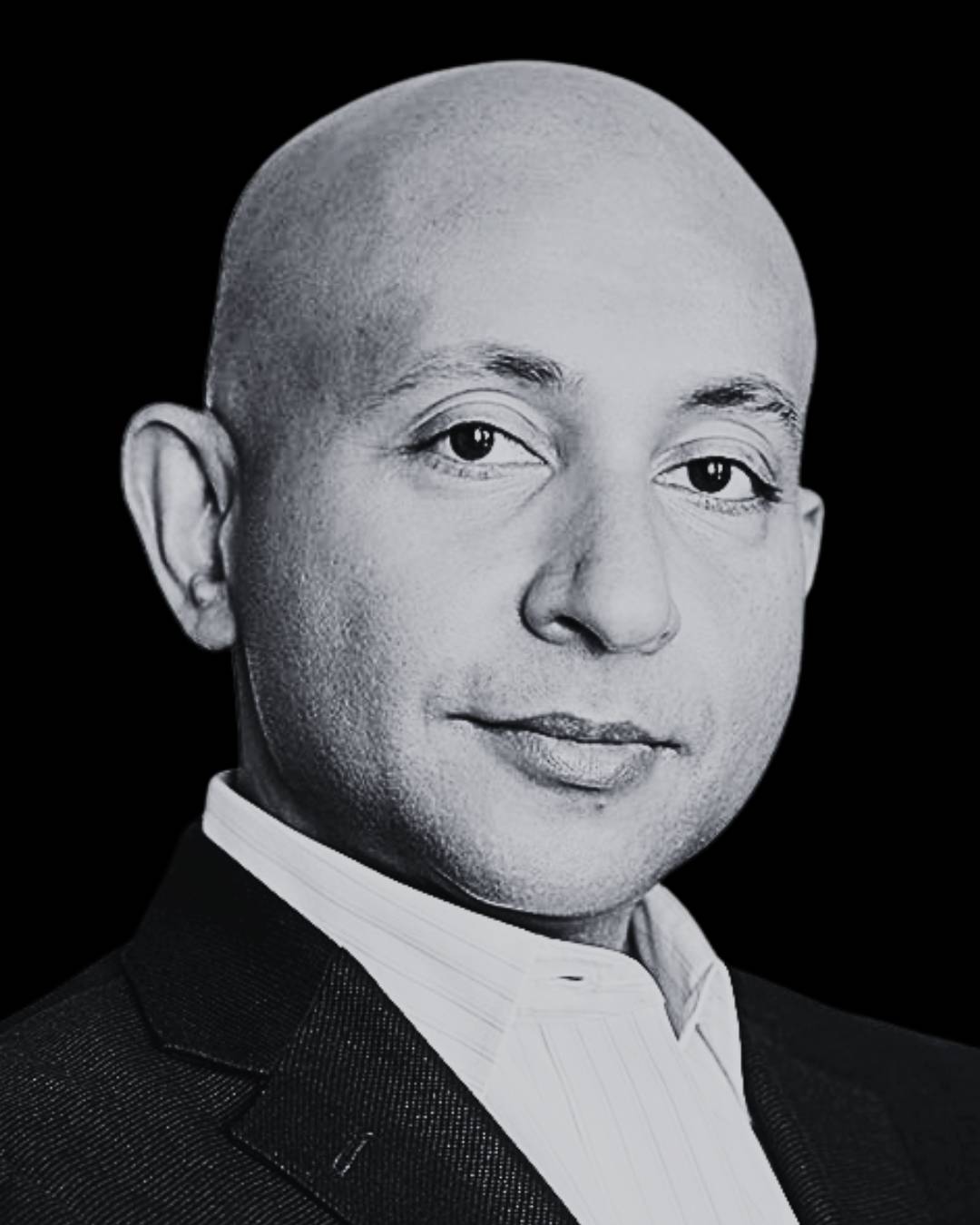
The conversation as it happened, lightly edited for reading. Christian asks, the guest answers.
Christian: Thaminda, what was the last time you seriously thought about giving up or stopping and what kept you going?
Thaminda: This one hit home, meaning close to home. My mother was suffering from COVID during the COVID times. During the COVID times, what that means is I'm here in the United States and my mother is in Sri Lanka and it's shut down. And I was quite certain when I got the call that she's going to pass. The question is, how do I get there? Do I need to be there? And the answer is, yes, I need to be there. But how do I get there? It's a miracle. Everything told me don't go, can't go, including my own family.
Of course, there's COVID fears. But at the end of the day, I ask myself, what if I don't go? What's the consequences of that? It would be just like many other people. My mother could be in the mass grave or side of the street or something. I didn't want that. And I decided I'm going to make it happen by hell or high water. And beating all odds, I finally made it to Sri Lanka in the middle of COVID.
It was shut down. It was shut down. Sri Lanka was also shut down. My father-in-law, who used to be in the military in Sri Lanka, he helped me get into the country. And two days after, my mother passed. And I'm very glad that I made it against all odds.
Christian: That's a tough story, okay.
Thaminda: It is a tough story. I would never forget that.
Christian: Where did you find her? Was she in hospital or at home?
Thaminda: She was in the hospital. She was in the hospital. I couldn't see her properly because there's a barrier. I could see her from a distance. And I had to be gowned up. I mean, during the COVID times, we acted like animals. We look back and we see, oh, my God, are we crazy? But the bottom line is we did what we did. We thought to save lives.
But I'm glad at least through multiple layers of walls and glasses I saw my mother taking what I consider the last breaths. And I know she knew that I was there. And I am here. I'm at peace that I made it there. Without giving up.
Christian: And was that a moment where you thought of giving up?
Thaminda: Yeah. It was a moment that I thought of giving up. Giving up travel. Giving up on responsibility. And essentially giving up, for me, it was more like making excuses. The why nots. And, of course, questioning taking a risk. You could always give up if you're taking a risk. You don't have to take the risk. So that was a major question.
Christian: Looking back to that, I think it's really crazy because people know you as chief business officer, dealmaker, storyteller. Everyone sees the highlights, but what's the price that people don't see?
Thaminda: Yeah. Everybody sees the highlights and everybody admires the journey, but no journey is without sacrifice. There are moments that you choose. And that choice comes by always, every single moment, asking this question that the CEO of Coca-Cola, I cannot recall his name, a long time ago in the 80s, asked. You always have to identify what is your crystal ball, what is your rubber ball. You can drop your rubber ball and you're going to bounce back. You drop your crystal ball, you're done.
So in this journey there are trade-offs that you do in your life. It could be personal life. And this journey is a journey that you go alone. You make these trade-offs, you are dealing with those trade-offs, not your team, not your friends. You have to be able to deal with it. A lot of people want to progress, a lot of people want to become the president, who knows. It's a long journey. It's a long journey.
Christian: A long journey, yes. And what about the voices in your head that you have to negotiate with?
Thaminda: Exactly. The voices in your head that you have to negotiate with. Tony Robbins put this in a very nice way. Tony Robbins is one of those American motivational speakers, very successful guy. Every time you need to do something, you need to enroll yourself and you need to be that. What does he mean by that? Well, what he means by that is you go in that moment, you become that. It's no difference than acting.
So moment to moment. You choose to be whatever that position the moment requires you to be. There are certain things you can't be, like you cannot be a physician just because you want to be. You can act to be a physician, but you can't be. But everything in general life, you can be. The very highly trained, skilled professionals like a surgeon or a physician or stuff like that, you can't, because you require certain skills. Just because you think you don't become a physician. But every other moment you can be.
Christian: So you're talking about identity, talking about becoming a version that you're not right now. Let us talk about the BioNTech CureVac deal. Bring us to the beginning. When you heard about this opportunity at CureVac, who did you have to become?
Thaminda: This is a journey most people will probably not know. Some know. Alex, the CEO, he is a good friend of mine. We were peers at Sanofi. He was the head of global oncology commercial sector. I was the head of global oncology business development sector. And when he left Sanofi, he said, hey, I want you to join my team. I'm like, no way. I was very partial for various reasons. Paul Hudson particularly, and John Reed, Alban de La Sablière, they've been very close to me, especially going through my personal journeys with my mom and everything. And I didn't want to leave until John left to join J&J as the head of R&D. I decided to leave.
Alex joins CureVac April 1st, 2023 to assume the CEO responsibility. The stock is on a free fall. I get the call from Alex almost six months into his job. We probably wanted to get a chief business person. I was still interested. I'm like, I can't. I'm committed to another company. I'm in the middle of a deal. And then he says, I asked him, it's been a long time, you haven't had a CBO, why now? He's like, well, let me be transparent. The stock is in a free fall. I don't know what to do.
And I'm like, well, what are you doing? Well, I'm doing a lot of things to shape up the company, trying to bring in strategy. I'm trying to bring in a new voice to the company, but nothing is stopping the bloodbath. So I was like, okay, just send me the corporate deck and take a look at what it is, et cetera, et cetera, et cetera. So I started doing a little bit of work on this opportunity after multiple people tried to convince me I should join CureVac. Then I realized the mistake.
Alex is a brilliant commercial guy, he's a great leader. Sometimes that's not enough. Sometimes you don't know that you're in front of the mountain because the mountain is so big you think you're in flatland. So I quickly realized the value proposition that the company is pitching to the marketplace is IP litigation. CureVac has a significant amount of IP over the years. This is the first mRNA company, and they have gone and litigated against BioNTech and Pfizer. And the message the industry is getting is, oh, you're suing them, that revenue base is 100 billion, even if you get one percent it's a billion dollars, it's almost the same size as our market cap.
The future is great, except the investors, the analysts are hearing it's more like a lottery game, scratch off. It's a 50-50. Biotechs like to be known as programs, quitting narrative, and a lot of other things. Then I looked at the financials from a couple of years ago and I was like, oh, my God. On top of it, you add additional litigation spend. That's a big problem. The analysts are seeing a draining hole, overspending on things that potentially have a 50 percent probability of success. So it's a toss-up.
Long story short, I joined the company. I told Alex, look, I need freedom to operate on this one, shape up my own team. Just like any good leader should, he gave me full reign. This is his skill, he's great at deploying people. Of course, he saw the bloodbath, he hires me, gives me full freedom, have at it. That's the only signal I needed. Within my first 90 days I had to be ruthless in terms of execution, shaping teams beyond what Germany's experienced, and then trying to build an equity for this company and trying to communicate.
So I brought in trusted people that I know from Boston, shape up the equity narrative, and very quickly communicate to the board we either have a very targeted program communication and drive to its success, and at the same time you need to plan to sell this company. Some people liked it, some people hated it, but the reality is this beast requires almost one and a half billion more investment over the next three years. It's not going to happen.
Christian: That is a pivotal moment, right?
Thaminda: It's a pivotal moment. We've just finished bringing in 400 million from the GSK deal and then realizing we need to bring in another billion to achieve all of the things that we wanted to achieve, and the transformation the company needed to go through was huge. And at the same time all you hear from the industry is mRNA is this, mRNA is that, overproduction, over capacity. So it's a lot of these negative sound bites, and getting something done was tough. But you cannot give up.
Christian: How did conviction look like at this point?
Thaminda: Low. You have to create conviction. What do we do as humans for 50,000 years, call it? Tell stories. We need to find our story. We need to find what are we going to talk about around the fire. And people are going to listen. Who are the people going to listen? It's not the ordinary audience. You need to create a halo around this story to make it successful. You need to create believers. This needs to be something that people need to have, not like, this is never going to get reimbursed, mRNA kills people, this is not it. You need to move away from that, and that requires extraordinary change.
It cannot be a single press release. It needs your face being here, your face being there, politicians, scientists, ordinary people. It needs to be a conversation. And this is why I tell you this new age of biotech requires 100 percent transparency. It cannot be done like magic. Nobody likes a magic trick. Nobody liked a magic trick in the past, but people got away with it. Not anymore. It's not public.
Christian: Personal and professional blur, right?
Thaminda: It's brilliant. Look at me, I'm doing this from home. And this is the office. So I cannot be an unknown person. This is the thing.
Christian: You talked about the publicity effect. It was everything in the media and you had to find a solution. What was at stake for you personally and professionally at this point?
Thaminda: Yeah. Personally, I believe in mRNA. I believe this could be just like AAV, just like cell therapy. This could be very successful. It requires two things to come together. One, collaboration, and this is where cell therapy and AAV failed. And two, capital. Without these two, it doesn't matter whether you have 10,000 publications, you're dead. And the only way to collaborate is either you consolidate and/or you partner. So personally I believed I needed to do something to potentially have a contribution to this industry. I'm not a scientist, so that's out. What else can I do? This is it.
Professionally, I needed to make sure that this is a success, otherwise this is another dying ship that I would have gotten into after my Affini-T debacle. Affini-T was my prior company. Cell therapy is hard to invest in, but also a simple principle like, you need a deal, is hard to install. So they couldn't get a deal. They missed a lot of windows and then of course it's hard to finance, and the company tanked. Now if I allow that to happen here as well, the stakes are much bigger. That was a hundred people, here it's a thousand people, in terms of company size. So professionally, if I let this sink, that's also not that great. High stakes.
Christian: Did you think about the negative side effects of a failure, of stacking two failures? Did you think about that at all?
Thaminda: I did, yeah. I'm not afraid to fail. This is the downside of me, because of this one fundamental belief I have that failure teaches more lessons than success. Failure is the only way I believe to learn. Sometimes because of that I try to push and cross the line, because I believe until you cross the line you don't know where the line is. So just like that, if you fail, you know what not to do. But then again, repeated failure is not that great.
Christian: Bringing it all back to meaning, right? What does it mean?
Thaminda: It means it's a learning. It's a learning. Affini-T story is an amazing one because I love the technology and I got to know the company when I was at Sanofi. One of my own team members was negotiating with this company for a deal. One year. And I'm like, okay, that in and of itself tells me that they didn't have the BD mindset. Who would negotiate for one year?
Christian: Nobody. What makes a good negotiator, and what differentiates a good one from an excellent one?
Thaminda: Well, what differentiates good from excellent, I think the excellent negotiators are the most reasonable negotiators. They are real, they're not slaves to a model, they're not slaves to parameters. They have a decent amount of decision-making authority and they're reasonable. Sell side or buy side, both. You could sell to outside, you could sell to inside, because inside stakeholder management is equally important as outside.
An excellent negotiator is somebody who uses time not as a platform, but uses time as a resource. It's a very important concept. I think you and I have had this conversation before too. People are taught to think of time along the x-axis. This x-axis is infinite. Time is infinite, you would do things with time. But if you start to stack up time as resources, time becomes finite. A great negotiator is acutely aware of time.
Christian: If you change time in its meaning, what is the outcome? How does it help you in negotiations?
Thaminda: Right. I'll give you an example. In a big pharma setting, there was a person who once told me, now we wait. We don't say anything, now we wait. And I'm like, asking, it was somebody senior to me, okay, this is the most foolish thing to do, why? Of course you're putting your discussions on hold, but the entire world is moving along. A competitor is also moving along. Think about the stakes here. A competitor is moving along and you just don't negotiate because you just learned this in the Wharton handbook or something.
Now the opposite is also true. The opposite is you put boundaries and value of time on both sides. The waste of time will reduce the value of the deal. Now how about that? Everybody wants to make a good deal, so the longer you wait, the less valuable the deal is. That's good.
Christian: That's fascinating. Do you have an example from your own deal-making, examples from your own negotiations where you used that and the other side didn't understand it? Maybe.
Thaminda: Yeah. And maybe saving grace. I'll tell you two examples.
One example is when I was buying my first house. I needed to get a mortgage, and this was during financial calamities and interest rates were moving up and down. I was monitoring the social media and realizing the Brexit is about to come. And I took a bet with my boss who said the Brexit will never happen. Brits are never crazy to exit the European Union. And I said, no, they're going to exit. My mortgage broker wanted to lock in the interest rate. This is the day of the Brexit. And I was not wanting to lock in the interest rates. I was waiting and I was driving everybody nuts. I was driving my wife nuts, mortgage broker, blah, blah, blah.
The day of the Brexit, this is my last day to lock in the interest rate. All of a sudden, the news breaks, the Brexit happens, stocks tank. I call my broker and said, I lock in the interest. That is the best mortgage interest I've ever gotten in my life.
Christian: So you used time as a resource. That's interesting.
Thaminda: Absolutely. This is one instance. The other one is, I wanted to buy an expensive car, and I was negotiating. Well, it sounded super expensive, let's put it that way. It was a Mercedes. So I had an Audi before, and then I wanted to get this Mercedes. And I told my wife, you only need to say one thing. When I turn around and ask you a question, whatever the question is, you only need to say one thing, and that thing is, I think I like the Audi better.
Christian: Really, okay. That's good.
Thaminda: So I went to the car dealership and I was negotiating the price, and new cars, it's hard to negotiate, blah, blah. And he was throwing all kinds of things to make the deal happen because the stakes are high, the price, the stakes are high. And then I turned around and said, I don't know, what do you think? And just like clockwork my wife says, I don't know, I think the Audi is better. Then I said, okay, thank you. That's like, okay, now I need to negotiate with my wife. What's the best you could do? And I got the deal I wanted. Walked away with the Mercedes.
Christian: People think that car dealers have a very good deal-making education, but sometimes they also just want a deal, right?
Thaminda: Right, they want the deal. Life is a deal.
Christian: It's a deal, yes. Life is a deal.
Thaminda: Right, right.
Christian: And you have also said every deal is a story, right? So tell me about storytelling and how you view storytelling as a tool and as a means also.
Thaminda: Maybe let's talk about BioNTech and CureVac. I was not planning to sell this company to BioNTech. I had a couple of others lined up already, having conversations, because I had three years to work this. I pushed my business, after I took IP litigation under my belt, to settle, because it made no sense to sue people. Everybody without a strategy goes and sues people, it's the worst. So my strategy is either you work with a partner who has a big checkbook so they can sue on behalf of us, or we settle. I chose to settle, because I need to settle this before I sell the company. Nobody is going to buy something with litigation in that scenario.
In the settlement discussion I realized the reason why they're not willing to settle has nothing to do with the litigation, nothing to do with anything. It's about egos. Somebody from our side pissed off the other side, somebody from their side pissed off our side, now we're at each other's throats.
Christian: Oh, okay. You find out?
Thaminda: Well, just talk. Conversation. The beauty of the negotiations, beauty of deal-making, is you need to be able to have a thoughtful conversation. Rule number one, don't take anything personally, and talk. And in this conversation I found out. Once I observed how the settlement discussions were happening, I realized none of these people are talking to each other. How the hell are we going to negotiate anything when you're not talking? So you are ascribing your legal points to the lawyers, lawyers go in front of the judge, talk, talk, talk, come back, no conversation.
On my way out, James Ryan, very good lawyer on the BioNTech side, I call James, let's just forget that you're at BioNTech, I'm at CureVac, just man to man, what the hell is happening here? You're not talking, I'm not talking, something is not right here. And he said, give me a call, I'll tell you the truth. So all right, once I got to know that this is the situation, I told him I cannot negotiate, I cannot settle. There's no settlement here. What I need to do is I needed to apologize on behalf of CureVac's prior management and people who've misbehaved to Ugur.
Christian: Oh, wow. Okay.
Thaminda: Because think about this. What is BioNTech to Ugur? The CEO of the company, that is the baby of Ugur. Somebody took a punch at the baby. Would you stay quiet? Exactly. So I knew everything. I knew the problem is not with the lawyers or the IP teams. The problem is at the very top of the house. Somebody's hurt. This is the unnecessary litigation to begin with.
I needed to apologize. So I requested the meeting. The meeting happened for settlement. That conversation led to where we are today. So this is it. I mean, the primal thing about.
Christian: It doesn't even surprise me. I have to say, in major disputes, it's always about egos.
Thaminda: It is.
Christian: But tell me how you managed that ego topic in a way that everybody was happy.
Thaminda: Somebody has to park the ego at the door. Might as well be the first. I walk into a room, you've seen it, I make sure that everybody knows who's in the room. That's me, but that's not always right. It's okay. It's okay to give somebody else the seat. And in certain instances, that is the wisest thing to do.
Christian: That's powerful. That's really powerful.
Thaminda: Ego is useless if you cannot use it for wellbeing. It's just hot air otherwise.
Christian: I had another conversation and she said, sometimes ego is the fuel for conviction. Can you help me understand how to balance ego and conviction?
Thaminda: In my world, your ultimate goal should be a result. To get there, you do need three things. One is the ego. Two is the conviction. Three is the drive. Ego should fuel the drive. Drive should be based off of conviction. This recipe will get you to where you want to get to.
Christian: So if people have it programmed in a wrong way.
Thaminda: People have it programmed the wrong way because they misuse ego with winning. Winning is not ego.
Christian: What is winning?
Thaminda: Winning is achieving the goal. Ego is one small piece of it. Just because you have the ego, that doesn't mean that you're a winner. You're the biggest loser if you just have the ego alone. There's a lot of power in humility. The most humble person can have the biggest ego.
Christian: We all just said ego is helping in a way, right? I see in a lot of founders, scientific founders, that their ego brought them where they are. That's a recipe for success, right? The three things. That's their recipe. They cannot get rid of their recipe for success. Who are they in the end? They lose their identity, right? I think it's a big problem we have to talk about.
Thaminda: This is an amazing question. This is the one big thing that in Europe is yet to be fixed. There's a misconception that scientific success, or analytical success as I call it, has an equal correlation to corporate success. That's not true.
Christian: Okay, tell me more.
Thaminda: For corporate success, there's two things you need. You need to have operational success and analytical success. A fine balance in between these two will make you corporate success. Fully operationally successful people cannot succeed in corporate. Fully analytical successful people cannot succeed in corporate. A balance in between these two can.
Let me give you an example. Scientific founder, the CEO, their ego, their drive, their conviction will get you to the beginning of this company. Once you get to that beginning of the company, you need to know how to run the company. If you don't know how to run the company, your ego and your drive will never get to there. You just don't know. Keeping away from learning should be the check telling you, I want to win. How to win? It's for me to back off and let somebody else come and take, so I can anyway win. 100 percent of zero is still zero. If you lose the company, you get nothing.
Christian: It's the most important thing that you can say to somebody starting a company, coming from academia, having a first glimpse of successes and trying to build a future on that. Have you ever been too convinced?
Thaminda: I have. I have. And they have generally led to. Being too convinced, you have to taper your desires. You need to understand what too convincing means. And being too convinced taught me time is a resource, not a platform. You could be super convinced and be convinced forever. There were instances where I was too convinced, and I cannot think of any success where I was overly convinced.
Christian: How did you change? How did you have to change? Did you have to fall five times, five times, until somebody else told you, hey, look, this isn't going anywhere? What did you do?
Thaminda: It's a combination. I fell flat quite a few times and then I asked the question why. And then I quickly learned, okay, what I was thinking is actually wrong, although I was convinced myself that it's right. And there were a few instances where I was told that to do this, to achieve whatever, I need to take a different path, or somebody else has to convince me. It's intervention. It was compassionate intervention, because somebody saw me going down the path to an endless pit of darkness. People don't call them out. I call this, think about that, you can find more people laughing at the toilet paper on your back than somebody who's coming and helping you take it out. So I appreciate people who can actually call both personal and professional.
Christian: We have a wrong culture also. We have the culture of, hey, you're not going to save the whole world. People told me that, when I was trying to give good advice, sometimes too much. But I think we have a culture of avoiding that type of confrontation.
Thaminda: Yeah, we do. It's become a little old. People have continued to say, hey, I can't save the whole world, so might as well let him lose. So is that how most successful people think? That's not how most successful people think. They have this die trying kind of an approach. Save the whole world or you die trying. Most people who say, oh, it's not my problem, I can't save the whole world, they have either plateaued in their mind and they will continue to plateau.
Making an effort requires a lot of things to come together in your mind. First is the thought, you think about it. Then you need to have a plan. What is that? And then you need to have the intervention target. Then you need to have an action. And then you need to deploy that whole thing. So all of this needs to come together in a single spot instance. It's a lot of work for the brain to think about it. People who say, hey, I don't want to be bothered, they probably don't balance their checking account.
Christian: I'd like to link that to what you said before, you said something about every deal is a story, storytelling and convincing people. I think there are some patterns that you can use, right? I'm asking you, how do you build a story that people believe in? I think you're a master at storytelling and convincing people. Help us understand how to do that.
Thaminda: The first and foremost thing is, do you believe the story? This goes back to this Tony Robbins philosophy of, are you enrolled in this story? If you are enrolled, the question is, how do I enroll you in my story? There are technical things to do in terms of getting somebody enrolled, but if you cannot enroll yourself in the story, it's going to be very tough to enroll you in the story. So if somebody doesn't believe that they have a great life, they cannot convince somebody else to believe that they have a great life. You see what I'm saying? It's that simple.
So I tell my team always, okay, here's your task, find the why. We are trained in business schools, the what, the how, the why. Enroll in that and believe in that. If you don't believe the science, forget it. Just go out of it.
Christian: As Simon Sinek says, it's the just cause beyond yourself or beyond something else. But I think that links to that, right?
Thaminda: Yeah. Any good story, it's like a piece of music. When you hear a good piece of music, you get images into your mind. It materializes. Like you listen to Mozart, Bach. I like to listen to Rachmaninoff. You could almost imagine. A good piece of music is about a river. When you close your eyes and listen to a piece of music, you could almost imagine the river, the rapids, the gentle current, the heavy waters. Everything is a piece of music about a river, I believe.
But a good deal story is like that too. Once you close your mind and hear the deal pitch, you need to get this deal done. You need to create a little bit of a hunger on both sides. They need to have an urgency on your side to get the idea of the want. Think about Pfizer and Medivation, or public debt battles. Think of the long battle for Medivation and Sanofi, and then Pfizer winning it. It's the appetite. The same thing could have happened to Tesaro. It didn't.
Christian: Pfizer had an urgency, midlife crisis, how I called it.
Thaminda: Yeah, absolutely. Total midlife crisis. Not just Pfizer. If you look from now until 2030, I call this the new age of biotech and biopharma, and I refuse to let the industry behave like what they've done before COVID. It's totally unfair to do that. We need a total reset. Everybody talks about financing for biotech. That's not good enough. It needs to be a total reset.
Christian: This is so important. I see the pain in the industry from all sides, from investors who have no fundings anymore, from biotech companies who are out of business. Tell me more about the reset.
Thaminda: Think about pre-COVID, this whole golden era of biotech. Money was free-flowing. There's what I call the entitled science. It's like Nobel Prize winners doing all kinds of science, nobody asks questions, just pouring, pouring, pouring. Why? The successes since 2014, the checkpoint inhibitors. Everybody's like, you're going to be millionaires, forget millionaires, you're going to be billionaires, no questions asked. And then during the dry spell, people started asking, this is how you should do biotech, this is how you should not do biotech. And then you look back on a lot of these people, these people have never been in biotech. And this is where I continue to believe the analytical and the operational needs to come together for this new wave. It cannot be just analytical or operational.
The golden era was all operational, there were fewer analytical phase. The dry spell is all analytical, there's no operational. This new phase needs to be operational and analytical. We need to have people, if they say I'm a head of BD, they better be head of BD. They should have done deals, they should know the business, they should like science, otherwise you could be, I don't know, Mary Kay or something. If you are a CEO, you better know how to run a company. It cannot be by accident. Oh, I'm just a CEO because I founded the company, and I refuse to take advice from venture people who've never stepped into a company.
I was at BIO-Europe, sitting in an audience. People were talking about rare diseases, and you'll see this on one of my LinkedIn posts coming up, and somebody gets out there and says, pharma doesn't care about rare diseases. And I quickly looked at this guy's profile, McKinsey, some random consulting, VC, probably was at pharma on a rainy day to just take cover. No idea how pharma business runs but talks a big game. It's a waste of time. I actually got up and I challenged him from the audience. And then all they were talking about was, well, rare diseases, we have fewer patients, fewer people want to get their funding. All of this is nonsense. These are the obvious things.
The reason why a lot of these rare diseases don't make it to market is the product doesn't make sense. Why? Very early on investors get into partnering arrangements because there are multiple technologies that are put together to make this product. That creates this massive royalty burden. And then all of a sudden now the product is successful, you still have to pay this massive royalty burden. Now the lack of people pricing and everything else comes together with this royalty burden, the product makes no sense. So this is the reason. It's not that pharma doesn't care, or blah, these things could be true, but the most important thing is there is no real guidance given at the very inception of that program. It's like giving birth to a child and sending the child to the forest and expecting a gentleman, and when you get a Tarzan you're like, what is this? This is how it is. You need to give the guidance.
Christian: Speaking of guidance, what advice would you give biotech founders seeking funding or partnerships?
Thaminda: First thing, get your story together. It's very easy to say, but when I say getting the story together, you have to identify the problem that you're solving, and it cannot be a problem that you're inventing. There are a lot of people who are inventing a problem and saying this is a problem and this is why we are doing this particular science, and when you ask pharma people, is that actually a problem, they say, no, it's not a problem. You see, the problem is, the reason why it's biotech versus pharma is the cost of capital arbitrage between these two ecosystems. That is the reason why these two ecosystems stay two.
Therefore the biotech ecosystem needs to look at the pharma side and say, what are the problems you have, and here's my solution that I'm working on. And that story needs to be crystal clear. If that story is very clear, you're not picking the phone up for ten thousand people, you're picking up the phone to call five. And out of that five you're going to be at least getting two term sheets, and you're going to go with one. This is number one.
Number two is raise money as you need. What does that mean? Well, if I'm going to announce it's 100 million, this is my raise, what that should tell the market is I have zero left to invest further. Every single dollar in that 100 million is accounted for. There's no cushions, there's no over-raising, cap table is super disciplined. All of these things have been taught and well thought out in terms of operational efficiencies. It's an absolute must at the Series A level. Otherwise you are building a platform for you to be a CEO. It's not a biotech company. It's a cushy couch that you have in your house that you could be the king.
Christian: One more, number three. One more in terms of mindset. What is the advice you would give biotech founders when it comes to resilience, conviction and impossible outcomes?
Thaminda: Yeah, the one word. Gratitude, because that touches a lot. First of all, you have to be grateful for yourself. There are people I have encountered in my life that they make other people their projects and spend years, decades, trying to fix people without fixing yourself. I caught myself in that rut sometimes. You know exactly. The word intimacy is into me, you see. I see the mistakes that I am doing.
Gratitude, and the other way is we have the brain capacity, we have our faculties to think of novel things. Gratitude for funders, and gratitude for the warrant others have given us to do discoveries and invest and create value, not to spend the dollar and buy swag and all kinds of nonsense. Spend responsibly. If you're a biotech CEO or anybody in the biotech space, biotech C-suite, every single person in that company has equal responsibility. A good CEO will be able to enroll the entire company to roll in the direction that you wanted to go. This is how it should be. It cannot be a mistake. There are no accidents in biotech.
Christian: That's powerful. Thank you for your wisdom, Thaminda. Thank you very much. I really enjoyed this. It was really fun. We are at the end of this episode. And hopefully we'll see each other again here or somewhere else. Take care.
Thaminda: Of course. Yeah, pleasure.
If you think you need to talk to this guest, reach out to me and I am happy to make a connection. Christian Rados, christian@rados-recruiting.com
All episodes and the problem pages