
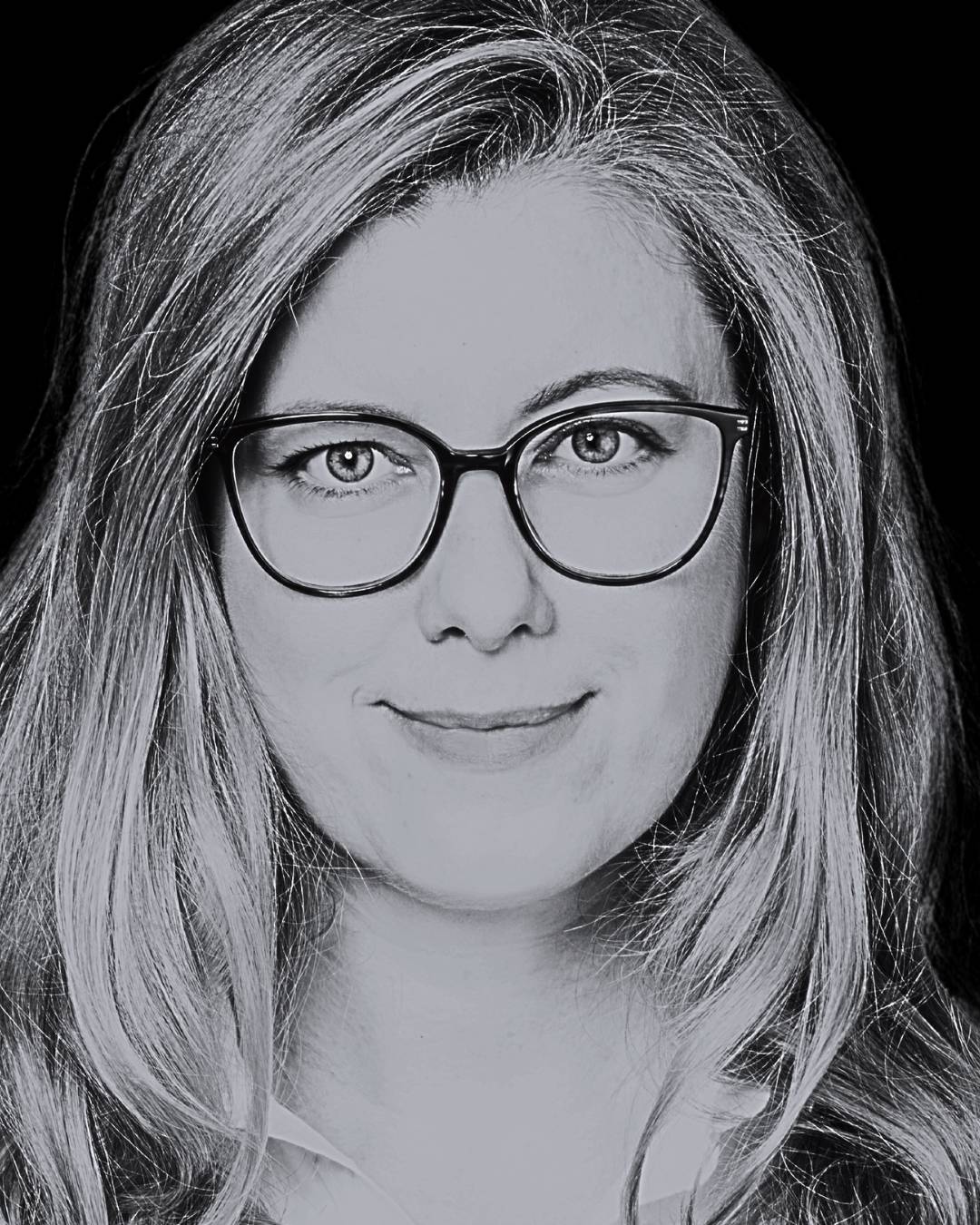
The conversation as it happened, lightly edited for reading. Christian asks, the guest answers.
Christian: What is something that you enjoy, but you are not really good at?
Melissa: Honestly, I think there are a lot of things because I enjoy a lot of things and I really don't think that I'm good at all of them, but I do them because I enjoy doing them and I have fun doing them and it doesn't matter to me whether I'm not really good at it or not. As long as I don't harm anyone, I think it's okay for me to do it.
But if you now ask me a little bit for hobbies. So what do I do in my free time? Then yeah, I love honestly to knit and to do some embroidery. And those are perfect examples for things I just love doing, but I'm really not good at.
Christian: Very good. Thank you. I think you are exploring things that you're not good at, trying to get better at it. I'm trying to link this to your professional life. So you moved from industry to investing at a certain point in time, I think five years ago. Which also means you went from executing to judgment somehow. What skills transferred immediately and what did you have to deliberately develop?
Melissa: Well, yeah, it's an interesting question. So I think, you know, my experience or my past in an operator's business. So really, you know, being within a company, having various financial roles executed myself. So being really part of an operating company helped me a lot to understand really how companies are operating. What are your day-to-day pains? And I really had the opportunity to work for big global companies with really gold standard processes and reportings and governance structures.
But I also had the opportunity to work with small companies where you don't have those gold standard processes and where you have to improvise a lot and really live from day to day or from issue to issue and solve one issue after the other. And I think that this experience helps me a lot today to try to understand what a founder or managing director is really into on their daily basis. But it really was to build structures, to scale structures, because I experienced that myself. So I think I can follow the pain founders and managing directors have maybe a little bit more than people who have always worked on the investor side.
And the skills I needed to develop is to step out of this operator view and getting really a more strategic view on the opportunities and the market chances a new potential investment could have. And also to think about valuation metrics, you know, and also develop a sense for, as you said, for judgment. What is a promising company? What is a promising founder team?
Where it's worth to put my money in, the money of the families I'm working for, which feels like my own money. So I don't differentiate whether it is my personal money or theirs. I feel responsible for their money as I do for my own. And these were skills and a feeling I needed to develop over the time. I also had really the luck, really the luck to work and observe with very experienced people I could learn from. Just from observing and trying then my first steps myself with their guidance or with their mentorship, and that helped a lot. I don't know whether there's a kind of course or studying you can take and then all of a sudden you're becoming the perfect investor. I think this is something that needs time and everyone needs to develop his or her own skill set and feeling for it, kind of.
Christian: Bring me back to that moment, maybe you remember, when you had the opportunity to become an investor. Can you bring it back to that moment? What do you think? Do you think that's easy? I'm born for this.
Melissa: The fun thing is that I was even not aware that I'm becoming an investor. You know, as I did not pursue this classic investor career by joining a professional fund, rather than joining a family office that was very entrepreneurial and really was looking for someone who has operational experience and had worked in companies to support their direct investments. It was really a slow process. You know, so my first task was really buying additional portfolios, pharmaceutical portfolios for the pharma companies we had in our portfolio. And this is something I did already in the past in my very first job as a finance person, to do, you know, all the NPV calculations and the business models.
Therefore, it was not that all of a sudden I became an investor, but it was a slow process from purchasing portfolios to investing into startup companies and also then now investing in more private equity-like companies. So it was really a journey and it was not to become an investor. That was really something I just recognized, you know, later in time after doing that now for other organizations. And I think that's what I learned in the last few years now that I'm like, oh, yeah, you're investing into companies. So, yeah, it sounds like you're an investor. It took a while really until I perceived myself as an investor. I saw myself always more in being a supporter of young companies or my portfolio companies.
Christian: I think that different label of the story really makes you different and really makes you more valuable to the companies who work with you. I mean, just listening to you, you're saying I'm not a real investor. So what is a real investor in your mind?
Melissa: Yeah, that's exactly somehow the question. What is a real investor? I know that really may sound funny because maybe for the people who know me or who see me, know me only in this investor role and see me as an investor because I'm deploying capital into companies directly. In my world, a professional kind of investor are all these professional funds who really, how to say, really only have the goal to invest into companies. I always think that working in a family office, yes, investing into companies is just one task of many tasks that you have because the main goal is just to preserve the wealth of the family and hand it over to the next generations. Maybe you are able to grow it for the next generations.
And one tool in doing so is investing into companies. But that's not, how to say, my only task I have in the role of being a partner or being an employee of a family office. There's a lot of other things around I need to take care and think about and consider. So maybe that's the difference. But I think, you know, those funds, their focus is really investing into companies. And for me, it was always passion. It was always a huge portion of my daily work. But it was not, you know, my only task of the day.
Christian: Very good. Do you see a difference between philanthropy or investing?
Melissa: That's a good question. Yes, I do. Especially, you know, coming from a family office. I love a clear separation between philanthropy and investing. Because I want to be a professional investor. So I have the same goal as all the other professional funds, which is with my investments, I, at the end, want to earn money, at least overall, across the portfolio. With philanthropy, you have the luxury to support projects that, you know, don't have to generate any commercial value. And you can really truly act and invest just in projects you want to support, for the good cause. Without demand. And with investing, you need a commercial benefit also.
Christian: Yes. I listened to a podcast of Simon Sinek. Somebody said, when women come to money, or men come to money, men would say, I'm an investor, like a badge of honor. Women would say, I'm a philanthropist.
Melissa: Yeah, that's true. I see that a lot. That's so true. But therefore, I really appreciate, you know, this new trend of kind of impact investing. And maybe that is also why I always stayed in the field of life science investment. So I consider myself a pure life science investor. Also, I found a lot of other things very interesting and I'm curious about it. But I'm a life science investor and I never left this field because it is more than just earning money. It is really what makes me get up each day out of the bed. It is that I know if we manage to tackle this issue or to tackle this problem, we bring a new therapy, a new diagnostic, a new, I don't know what, on the market that really improves patient lives.
And therefore, it really doesn't matter so much to me whether I bring it on the market. I want to bring it to the patient. So I know if we manage to tackle it, then there's someone out there who hopefully gets better, feels better, or can lead a better life, or we can improve the overall healthcare systems. I think, for me, that's a huge portion of why I am active in the life science field and why I don't want to leave it because, you know, I know quantum computing is very exciting and all, you know, all the space tech is very exciting, but I can't get up for faster computing. But you really, I run the extra mile because I know if we manage to bring that product to the patient, then the patient will improve.
So therefore, I'm also very purpose-driven and also driven by this higher value or good cause of the life science field. And I can absolutely understand why so many women, wealthy women or women of wealthy families focus on philanthropic endeavors or now focusing on this relatively new field, it's not so new anymore, of impact investing. I really try to combine to invest in, for example, projects that help to tackle the climate issue, global warming and things like that.
Christian: Let us talk about Femtech. I think this is a new opportunity for most companies in the biotech industry. Where is the real gap?
Melissa: Yeah, I would love that it becomes a new opportunity for life science companies and startups. And I would really love to see more founders taking the courage, you know, if they have a platform, to choose an indication being in women's health first over the next, you know, cancer or immunology topic.
You see currently a wave of more awareness for this topic, women's health, which is kind of surprising because half of the population are somehow women, but it was completely normal until 1993. Just 1993, you know, that I was already born. I was almost 10 years old back then. It was not a requirement to include women in the clinical trials. So imagine you could have gotten approval, FDA and also EMA approval, very well without having any women in the clinical trial. And, you know, there are good reasons for it to not include women in clinical trials. They are from the risk of being pregnant and the unknown impact on the unborn life, but also women's cycles and hormones make it all the more difficult to get meaningful results out of a clinical trial.
So I absolutely understand that, but I'm very happy that there's currently something changing, that we recognize and understand that also on the medical side, there are major differences in the health of a woman in comparison to a man. It's not only about the reproductive health, but we also recognize that the entire immune system, for example, in women works differently than in men. And also that, for example, a lot of heart diseases, women are reacting completely differently than men. So women's health is not only limited to their reproductive organs. A woman has, it is so much broader.
And over the past years, we just ignored these little differences and therefore I really appreciate that this gets now more in the spotlight and more and more people recognize it, also in the light of this more precision and personalized medicine. You know, we are talking so much about personalized medicine and a more precise medicine that is more individualized without really taking care that there's a difference between women and men. So, you know, what I think is our first step, we have to go in that direction.
And I really appreciate what's currently happening in the U.S. You know, Melinda French Gates is now with Pivotal Ventures dedicating 100 million US dollars to that topic. Or when Jessica Federer is announcing now the Women's Health Fund, a fund of funds where she is really supporting women's health topics and founders in that space. And I think in Europe, we are currently lagging a little bit behind, which is really a pity and I hope that we can create a similar movement, so that we don't have this movement only in the U.S. and the support only in the U.S., but also here in Europe with European founders and companies.
Christian: What makes it harder in Europe as opposed to the U.S. to raise Femtech?
Melissa: That is an interesting question. Yeah, because in general, I mean, you know, in general, the life science community is currently struggling with funding. So the funds have a tough time in raising funds for their professional funds, and therefore also the founders and the companies, the startups, really have a tough time in getting sufficient funds. So it is, I think, placed onto this common topic that in Europe there are in general not so many funds available as in the U.S. But I also think that in Europe the landscape is a little bit more fragmented. So what I see is, I see a lot of small initiatives to tackle that issue, but I don't see, you know, this big, this one team that is taking over a kind of leadership or really, you know, collecting a major amount of funds like now Melinda French Gates deploying 100 million only to that topic. This movement I don't see here in Europe. So maybe we need a little wake-up call to generate something similar.
Christian: Is the label Femtech maybe too big?
Melissa: No, I don't think so, honestly, because I think we have to go broad in the beginning because we have to create the market first for that topic. And I think it would be too early to narrow it down or to exclude any topic. I think what you really need is encouragement for all the scientists out there that it is worth it and there is money to do foundational research on that topic. And that's actually, you know, the basis then also for company creation. And you also need encouragement for a founder to take on a women's health topic. And there I don't want to exclude a founder that is now on the medical device side or on the diagnostic side or maybe it's a founder really on the very basic side, just by generating an AI model for something or just providing a database for those AI models. So I think it would be too early to narrow down that topic. So I think, as we addressed in the beginning, we need to keep it broad and really include everyone who wants to contribute something to that field.
Christian: Thank you. Yes. The Femtech business is projected to be around 50 billion by the end of 2025. What do you think, what are the business models that work better in the European healthcare system than in the U.S.? Do you have a feeling for that?
Melissa: Honestly, not yet. What is important for me is where I differentiate. There are already a lot of lifestyle and wellness applications out there, and it is good that they're there because they are helping already the first people. But I'm really interested more in scientifically proven, medically validated solutions, you know. It's nice to have the app that helps me to cope with my menopause symptoms, but I want the medication also for it, you know. I want the drug for it. I want the diagnostic methods for it. I also want, as I said, not only dealing with menopause topics, but also really talking about heart disease, talking about osteoporosis. So there are so many diseases out there that need real treatment and honest diagnosis.
And for me, it's important to focus and dedicate money to those topics where we all know that those take much longer, because then you're really, again, in the development of therapeutics or real diagnostics or real foundational AI models or whatsoever, which take much longer than just a lifestyle application or some wellness application. And I think we now need to do the heavy lifting.
Christian: Yes, thank you. You also mentioned one topic that is very, very interesting to explore a little. When we look at clinical trials, first in men, studies are in men, obviously, because of course the risk of getting data or missing the endpoint, with markets and clinical trials and the pressure to create valid data, there is no incentive, I guess, to include women. Is there a possibility to change that trajectory? Is this something that investors have to guide on, or what do you think?
Melissa: I hope. I think that's an important topic and it is a topic that a lot of people have not on the map of things we need to discuss about, and maybe we need to change. I just read last week a LinkedIn post that the FDA was now finally willing to make a change in the primary endpoint for osteoporosis clinical trials. Until just recently it was the case that the only proven clinical endpoint was showing whether a real bone fracture was happening or not. Those, you can imagine how long those clinical trials take and how many people you need to, or patients you need to enroll in those clinical trials. And I think that also explains why there are so little, few or almost none, no innovations in that field. No innovative drug is currently under development in that field. At least not one I'm aware of. So I hope there are some I don't know about.
But it's clear, if you have this huge challenge to prove this clinical endpoint, as an investor you know immediately that we are talking here not just about a couple of millions. That's a really huge number to finance such a clinical trial. And therefore I really appreciate the efforts. I think a co-leader for this effort and discussion was Mary Bouxsein from the Harvard Medical School, who really managed now to get the FDA to agree that bone mineral density is a new surrogate endpoint for fractures. And I hope that this doesn't make clinical trials now easy or simple, but I think it makes it now more realistic that you can actually finance such a clinical trial and perform such a clinical trial. And I'm a little bit afraid that there are many more endpoints out there that are currently kind of prohibitive for getting new treatments or innovative treatments related to women's health on the market. And we are just not aware of it, to be honest. I was not aware of that case here.
Christian: For me it sounds like all the certainties that we had, you have to question everything again. I don't know.
Melissa: I don't know whether we have to question everything again, but I think we need to have this awareness. And if we look onto a topic, we have to keep that in our mind and then be brave enough to consider it and act according to it. So as I said, if there's a founder who has a wonderful platform technology and he or she has to make the decision, what is the first target they are trying to explore, then I would love to see that they are taking one that is related to women's health and not one of the trend topics, oncology.
Christian: A call out.
Melissa: Exactly. So, but yeah, I think there's still a way to go. I also see we have some momentum there and I hope that's not the fire in the pan, but that we really get this momentum into something sustainable, and that in five years we are wondering why we ever talked about it because it comes so natural.
Christian: Thanks for being an ambassador in this place. You just mentioned also, when a startup comes to you, a team, let's talk about how investors choose founders. In mainstream media we all know the story of Facebook and so on. Investors often say they invest in ideas and teams. How much do personality and trust and likability influence the investment decision?
Melissa: I would say it influences us a lot, to be honest, especially the trust one, because without having the trust that the team that is pitching the idea or the project to me is able and willing to execute the next milestones I'm investing on, I can't do the investment. And that is maybe also the point where a lot of investors say they are not only investing in an idea or in a project but also in the team behind, because you really need some strength and resilience and maybe sometimes also some stubbornness to bring the project to the next milestone and to execute on that project. And this is something you need to find out during a due diligence process and during your interactions with the founders, whether you really can gain the trust that this team is the one that you think is able and capable to bring the company, the project, to the next value inflection point, to the next milestones you are actually putting your money into.
But it also means this trust component. You need also this trust to sometimes have unpleasant discussions, also about the team, because part of the truth is also that in most cases the founding team is not the team that is exiting the company. And during the process or the lifetime of the company there are changes in the team and the management team. And those are, I think, the much more delicate decisions and the tougher conversations you need to have with the founders. And I personally can have those conversations much easier if there is trust between me and the founder, and not only trust but also that we really have the same goal, bringing the product to the patient or building a successful company, because then both can come to the decision or the conclusion that we need other skills and capabilities, or additional skills and capabilities, in this entity and need to make changes there.
If we don't have this agreement or this common sense or the same understanding and the trust amongst each other, this gets really difficult, especially in those tough situations. Not that everything is sunshine and rainbows, but in the life science field you never have only sunshine and rainbows. You have crisis. You can rely on it, there will be crisis. And to tackle them you need this trust and you need really this common goal of bringing the therapy to the patients, making the company a successful one.
Christian: Tell me about an example when you were able to create trust deliberately.
Melissa: I am not sure whether I do that deliberately. It is really more also a process. It sometimes starts already with the very first pitch, when you recognize that this pitch is not someone telling me just a story and I'm only sitting there consuming this story. You come already into a discussion, you come already into an exchange of some thoughts, and you're exchanging already views and different experiences and ideas. It really starts from there and then it goes through the entire due diligence process.
Something I'm always saying to the founders: tell me where are your risks, where are the failures, where are the issues. Now is the time to bring it on the table and then we can discuss together how to deal with it and how to handle it. Don't let me find it. Don't make me search for it and then find it. That's where trust already starts. But I said, be honest with me and just tell me very frankly, where are the issues, where are the dead people lying around, and then let's discuss together what we do with them. Do we bury them, do we burn them? But that's to me already the first trust-building step.
Christian: If they don't show you anything?
Melissa: I would love it if someone is telling me up front, there is a point one could discuss about it. For example, whether the IP is as strong as we think. Look, we have here an exclusivity agreement, or it's with today's knowledge not the wisest contract lying around with some special rights. I think most of the founders have a feeling for what is maybe not a hundred percent, more in the lower percentage of correctness, more on the black side or on the gray side than on the white side. And I really appreciate it if they come up front and proactively with those topics rather than I or my lawyers and advisors find it and bring it up to the table.
Christian: Yes, very good. Let me explore this a little bit more because usually you expect from founders to be very convinced, with a lot of conviction about their capabilities, are they able to pull it out, is the team capable, do they believe in their product and so on. And at the same time you expect them to be vulnerable and reflective on their weaknesses. And I think this is difficult to pull off as a founder.
Melissa: Yeah, I can understand. Maybe, you know, it is also about the, not sure whether I am personally so on conviction, maybe sometimes some realism. I prefer that a founder is realistic about his project, his product or her product, and I value this realistic view more than someone who is just, you know, convicted by something. Because if it's only conviction, then you have immediately the question, yeah, show me the data or show me the facts where this conviction is coming from. I love to believe you and it's a really nice story, but where are the facts, where are the figures to prove your conviction?
When it comes to numbers, I appreciate the more realistic numbers more than, you know, this visionary, we are ruling the world numbers. And I prefer founders who have a realistic view and also maybe more scenarios, you know. It's my base case, I have good arguments why I think it's really realistic to make that base case. But if I don't know, this and that is happening, then maybe we can even achieve, I don't know, higher market share, higher prices, higher revenues or whatsoever. But this gives me a better feeling than someone who is pitching me the next unicorn and being, you know, the next king of the world. So this is more trust building, at least for me. But I'm also very sure that you will get very different answers to that question. But that is what is appealing to me as an investor and what I prefer to invest into.
Christian: Let me ask a follow-up question about conviction. When do you think is conviction necessary? In uncertain times, in a pitch probably a little bit, but you said it, you said the realistic part is more important and the data-driven part and the de-risking is more important, which I totally understand. But where in this journey do you need founders to be convinced? I mean, they could jump off the boat at a certain time when you actually wanted them to stay, right?
Melissa: Yeah, absolutely. I mean, that is also part of the trust building, you know, to gain the trust that the founder will stay at least to reach the next milestone. I mean, that is somehow the prerequisite, you know, that's kind of the unspoken deal you do as a founder, as an investor with the founders. I'm putting my money into it, I'm putting my trust into you, but you are promising me to stay there, do your job and reach the next milestone we are agreeing on. So that's kind of the underlying deal you're doing with a founder. And yes, I mean, all these contractual clauses you do to support this alignment, vesting clauses, lock-up periods, I don't know what, in my opinion those contractual clauses are all nice, but at the end you really need the buy-in of the founder that he really wants to do it. It's really this intrinsic motivation to do it and to dive all the time. I think it's a little bit too tough, but you know what I mean, to really put all sweat and tears and blood into that project together.
Christian: What is the biggest misconception about family offices?
Melissa: I think one of the biggest misconceptions is that they are considered as more unprofessional when it comes to investments than a fund like a venture fund or a PE fund, that it's the more easy to get kind of money. And this is, I would say, a prejudice. It's hard, I would love to say that it turns out wrong, but I know that there are a lot of, especially high net worth individuals that are not as professionally organized as a family office, who really invest in convincing ideas without doing a real proper due diligence or do it without a real deep understanding of the market or what it really means to develop a company or a startup, what it really means to invest into a startup. They really just do it because they are convinced by the founder and the idea of the founder and they just put money into it.
That's happening and it's happening more often than one would think. And this is something that always frustrates me a little bit, especially in the life science field, because most of those cases don't turn out to be good investors and people are losing money. And at the end this is burning the life science topic for them or the venture topic for them, and then we are kind of losing them in the ecosystem and the community as a potential LP or business angel or maybe as a professional investor. But when it comes really to organized family offices, there are only a few of them who really do direct investments. And you can rely on it that those who are doing direct investments have some experience with it or have some professionals there, and those who are going into startups, venture and the life science field bring also some experience there. So they might have a different way to evaluate or to judge an investment, but it's not the case that this is the easier money to get or the dumb money kind of to get.
Christian: Maybe even more difficult, more often you say no. So let us talk about that. Why is saying no often the better decision?
Melissa: It is often more difficult to say no actually than to say yes. Especially if you had already a deeper interaction with the founder, the team and the company, then saying no is even more difficult than just saying no to a pitch, because you dived already into that topic. You built already a kind of relationship with the team, and then to say no to an investment opportunity is quite difficult, at least for me personally. Although there are still a lot of good reasons to say no or to come to the conclusion. And I really always try to say very quick no, not running the full process and then saying no, I don't know, at a time where the founder thinks already he has a term sheet secured, you know, and it's just waiting for the term sheet. I think it's only fair if you communicate your doubts or also your question marks as early as possible, to spare time for the founder and also to make it easier for you to still say no without losing face.
Christian: Yes. Tell me about a decision you would make in the same way again.
Melissa: There's really no investment decision where I regretted saying yes. It's also something where I say most of the first assumptions or the original investment assumptions, the assumptions from our investment hypothesis, turned out wrong and are completely different than what we thought. That is also where I say, you once said yes, you made a commitment. You made a commitment to the company and you made a commitment to the founders. And then, if the company develops completely differently than you thought or the founders thought or we all together thought, that's not a reason to walk away. And also, you know, if a crisis comes, it's not a reason, at least for me, to immediately walk away. It's really more how do we tackle that together and now, you know, put our heads together, put our experiences together and try to solve it or make something out of it.
And I think this is something where then really the good investors separate from the not so good investors, or the entrepreneurial investors separate from the just-put-money-in investors, because that is then really the time that you need to develop an entrepreneurial sense and really you need to provide advice to the company and roll up your sleeves and say, okay, and now let's work together, how do we solve that together. And yes, sometimes you have to come to the conclusion that it's not working out and that you can't solve it all together, or that you lost the belief in the project, in the idea, or that you lost the trust that this will turn out to be a success. And yes, then you may have to make the decision to not invest further into that asset or into that company.
But, you know, that's only the last resort. Thankfully, I haven't had this situation often where I really had to say, I'm not investing anymore. But I also had insolvency and restructuring cases. I mean, restructuring is part of the journey. And I think as an early life science investor, it is also part of the journey to have the cases that end in the closure of the company. That hurts, that hurts a lot. That also hurts the ego, to be honest, because it means you were not able to turn it around together with the managing team. But it is part of an investor's life. And then it's really just to also master those situations with honesty and with dignity and with respect to all the people who are involved and accompany that journey. And I think that's at least the important thing for me in those cases.
Christian: Yes. And you're talking now also about responsibility in investing.
Melissa: Absolutely. As an investor, as a shareholder, you have a certain responsibility against the company, against the employees, and also against the other shareholders at the end. It doesn't mean that you throw good money after bad, but there is, for me, it's undisputable that there is a responsibility you have to take seriously, and where it comes really to real partnership and fairness amongst all the parties involved.
Christian: Yes, I agree. And I'm trying to understand also what or who shaped you and how you think today about leadership and decision-making. Was there a mentor or a person in your life that you can think of?
Melissa: I think it is not the one person, but I was fortunate enough to collaborate with really different experienced people. And I really loved just observing them, how they are reacting to certain situations, how they were behaving in certain circumstances. And sometimes I had the opportunity to ask questions, sometimes to ask, why did you do it like this and not like that? And my reaction would have been to do it like this. I would not have come to the idea to handle it how you did it. But often it is really just by observation, also sounds maybe stupid, but listening to their stories from past and previous transactions. You know, you often have this situation that during a dinner or during a coffee, they are telling about past transactions, past difficult situations, and this is something that resonates a lot with me and that is food for my thoughts, to think about how would I have reacted in those situations.
And sometimes, you know, when I'm in a difficult situation and thinking about what to do, how to react, how to behave, what is my point of view now, how do I communicate, what standpoint do I take now, then it's really something where I am thinking about all those stories and my own experiences to come to a conclusion and take my point.
Christian: My last question is, is there a book or a movie you've ever returned to more than once?
Melissa: I'm not reading leadership books, for example. One book that helped me, you know, to understand this entire AI thing a little bit more is the book of Why of Judea Pearl. And that was actually also once a gift from a founder that built an AI digital twin. And we had a lot of discussions. And then after, I don't know, the second or the third in-person meeting, he gifted me this book. And I said, listen, you have to read it, it explains everything. This I couldn't say so, but it was very good to read and to understand a little bit.
Christian: Yes, at least you read it. Usually people buy books and don't read it.
Melissa: But I didn't dare to not read it because I was always afraid he's asking me some questions about it.
Christian: Okay, that was a good strategy to test.
Melissa: Yeah, exactly.
Christian: Very good. This was really insightful. It was a joy talking to you. Thank you very much.
Melissa: Thank you. I hope we see each other again here or somewhere else.
Christian: Looking forward to it and all the best. Bye.
Melissa: Bye. Yeah, thank you. Have a good time.
If you think you need to talk to this guest, reach out to me and I am happy to make a connection. Christian Rados, christian@rados-recruiting.com
All episodes and the problem pages